

Defence technology has been evolving as per the emerging security environment and is not driven by technology alone and is largely influenced by the political, economic, social and technical scale of the society. Historically, conflicts have genesis in maintaining strategic autonomy, control of wealth and safeguarding or propagation of ideologies. The economic, demographic and societal tensions in an increasingly globalised environment have further accentuated the scale of security challenges leading to a continuous struggle for survival and ever-increasing conflict scenarios.
Warfare has changed a lot since the Industrial Revolution. With new technology and the information age, the way wars are fought and won has been transformed. In the past, the Industrial Revolution led to the mass production of weapons. Now, we see the use of advanced technologies like artificial intelligence, machine learning, and drones in conflicts. This evolution in warfare reflects the constant changes in our world. Alongside these changes, the defence sector plays a crucial role in ensuring national security, safeguarding India’s sovereignty, and contributing to regional and global stability. In recent decades, India has made significant strides in modernizing its armed forces and defence infrastructure. This transformation is driven by a combination of geopolitical necessities, technological advancements, and economic growth.
Reforms and Modernization Efforts
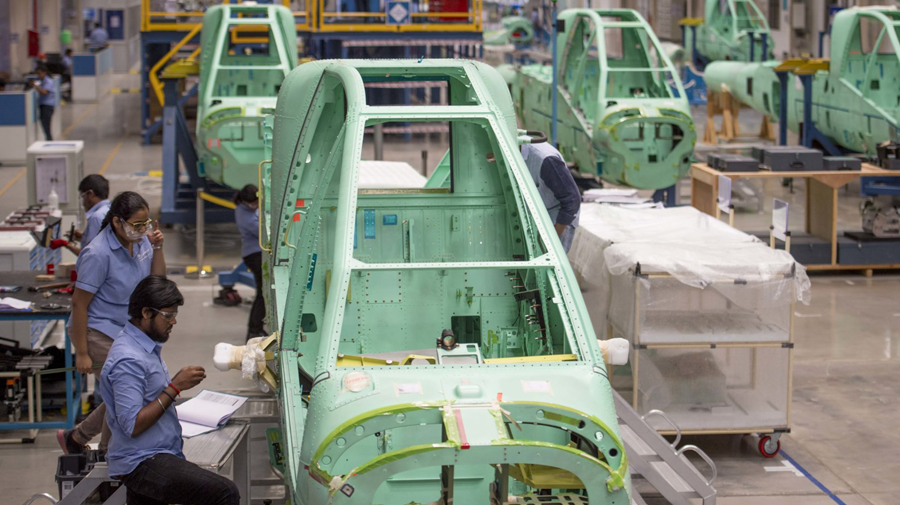
The Indian defence manufacturing industry is an important part of the economy. To modernise its armed forces and reduce reliance on foreign defence procurement, the government has taken several steps to promote ‘Make in India’ activities. These steps include various policy support initiatives to boost indigenous production and innovation in the defence sector.
In recent years, the Indian government has implemented several key policy initiatives to boost the defence sector. India’s defence sector is undergoing a significant transformation, driven by the government’s ambitious Aatmanirbhar Bharat (Self-reliant India) initiative. In a major boost to this strategy, the Ministry of Defence recently unveiled the fifth Positive Indigenisation List (PIL) for Defence Public Sector Undertakings (DPSUs). This list identifies 346 strategically important defence items that will now be exclusively procured from domestic manufacturers. Hindustan Aeronautics Limited (HAL), Bharat Electronics Limited (BEL), Bharat Dynamics Limited (BDL), BEML Limited, India Optel Limited (IOL), Mazagon Dock Shipbuilders Limited (MDL), Goa Shipyard Limited (GSL), Garden Reach Shipbuilders & Engineers Ltd (GRSE) and Hindustan Shipyard Limited (HSL) are the DPSUs involved in defence items of the fifth PIL. These five lists include highly complex systems, sensors, weapons and ammunition.[i]
Till June 2024, over 36,000 defence items were offered to the industry for indigenisation by the DPSUs and SHQs. Of them, more than 12,300 items have been indigenised in the last three years. Key initiatives include prioritizing the procurement of capital items from domestic sources under the Buy Indian category as per the Defence Acquisition Procedure (DAP) 2020. Additionally, the industrial licensing process has been simplified with longer validity periods, and the Foreign Direct Investment (FDI) policy has been liberalised, allowing up to 74% FDI under the automatic route and 100% by Government Route. [ii]
The other initiative leverages the SRIJAN portal, launched in 2020, which connects DPSUs and military headquarters with Indian companies, including MSMEs (Micro, Small and Medium Enterprises) and startups, for potential partnerships in indigenization projects. This fosters collaboration and empowers smaller players to contribute to India’s defence manufacturing ecosystem. The Indian defence sector is experiencing a silent revolution due to the agility and innovation of Micro, Small and Medium Enterprises (MSMEs). With nearly 10,000 MSMEs in the A&D ecosystem, they provide maximum manufacturing depth and are a significant force multiplier in the sector. Policy reforms have integrated MSMEs and start-ups into the supply chain, leading to a 200% increase in defence licenses issued by the government in the last 7-8 years. This shift in focus is a significant contribution to the Indian aerospace and defence industries.[iii]
In a bid to revolutionise India’s spacefaring ambitions, the government has introduced two key initiatives: Innovations for Defence Excellence (iDEX) and Mission DefSpace. iDEX, a well-established program, fosters innovation in the defence sector by connecting start-ups and entrepreneurs with the military’s needs. Mission DefSpace, a recent addition, builds upon this success by specifically targeting the space domain. Together, these programs aim to harness India’s burgeoning tech talent to develop cutting-edge solutions for defence space applications, propelling the nation towards self-reliance and a leading role in the new space race. Furthermore, the government has established two Defence Industrial Corridors in Uttar Pradesh and Tamil Nadu and earmarked 25% of the R&D budget for industry-led research and development.
In the financial year 2023-24, the Ministry of Defence achieved unprecedented growth in indigenous defence production, reaching a record-high value of Rs 1,26,887 crore. This represents a 16.7% increase from the previous year’s figure of Rs 1,08,684 crore. The government has set a target of achieving defence manufacturing worth Rs. 1,75,000 crore by 2024-25. The contribution to the total value of production in 2023-24 was significantly shared between Defence Public Sector Undertakings (DPSUs) and other Public Sector Undertakings (PSUs), which accounted for 79.2%, and the private sector, which contributed 20.8%. Both sectors have shown steady growth in absolute terms, indicating a robust expansion in defence production across the board.[iv]
The remarkable increase in production has been attributed to the comprehensive policy reforms and initiatives introduced over the past decade, which have streamlined processes and enhanced the ease of doing business. Over the last five years, since 2019-20, the value of defence production in India has consistently increased, showing growth of over sixty per cent. This trend highlights India’s successful trajectory toward becoming a self-reliant and globally competitive defence manufacturing nation.
Source- Department of Defence Production, Ministry of Defence, Government of India
Fostering Global Export
The ‘Defence Production & Export Promotion Policy (DPEPP) 2020’ serves as the Ministry of Defence’s strategic blueprint to enhance India’s defence production capabilities, aiming for self-reliance and increased exports. The policy sets ambitious targets. The policy also seeks to create an environment conducive to research and development, reward innovation, foster Indian intellectual property ownership, and build a self-reliant defence industry. These measures collectively aim to position India as a significant player in the global defence market, driving both economic growth and national security.
In the Financial Year 2023-24, India’s defence exports reached a record-breaking Rs 21,750 Crore (approximately US$ 2.63 billion), marking a remarkable 32.5% increase over the previous fiscal year’s figure of Rs 16092 Crore. This significant growth highlights an impressive 31-fold increase in defence exports over the past decade, compared to the data from FY 2013-14. The achievements are a testament to the concerted efforts of both the private sector and Defence Public Sector Undertakings (DPSUs). Notably, the private sector contributed around 60% of the total exports, while DPSUs accounted for the remaining 40%.[v]
Source- Department of Defence Production, Ministry of Defence, Government of India
This remarkable growth trajectory has been propelled by comprehensive policy reforms and ‘Ease of Doing Business’ initiatives introduced by the Indian government. The implementation of end-to-end digital solutions has streamlined processes, boosting defence exports. Additionally, India’s defence diplomacy efforts have strengthened international partnerships and increased the global acceptability of its defence products and technologies. According to the Economic Survey 2024, India has secured a place among the top 25 arms-exporting nations. This surge in exports reflects the rising demand for Indian defence innovations and underscores India’s growing stature as a key player in the global defence market.
Conclusion
These achievements reflect the success of various government policies and initiatives taken by the Government. Acknowledging this milestone, Defence Minister Rajnath Singh emphasized the government’s strong commitment to establishing India as a leading global hub for defence manufacturing. The positive impact is already evident. This not only strengthens India’s self-reliance but also stimulates economic growth through increased investment in the defence sector. Looking ahead, the involvement of academia and research institutions in these projects is expected to further enhance India’s domestic design capabilities. The success of the PIL program demonstrates India’s commitment to building a robust and self-sufficient defence sector, ensuring a more secure future for the nation.
[i]Aatmanirbharta in defence: MoD notifies fifth Positive Indigenisation List of 346 items for DPSUs. (n.d.-b). https://pib.gov.in/PressReleaseIframePage.aspx?PRID=2033571
[ii]India’s Defence Manufacturing Industry Revolutionizing Exports | IBEF. (n.d.). India Brand Equity Foundation. https://www.ibef.org/industry/defence-manufacturing
[iii]SIDM_29th Feb_Regional MSME Conclave – Hyderabad.pdf. (n.d.). ZohoWorkDrive. https://workdrive.zohopublic.in/file/yxt1t991f415a7eae40b0a6ef0e4a161d2690
[iv]Annual defence production hits record high of approx. Rs 1.27 lakh crore in Financial Year 2023-24. (n.d.). https://pib.gov.in/PressReleasePage.aspx?PRID=2030887
[v] (Defence Exports Touch Record Rs 21,083 Crore in FY 2023-24, an Increase of 32.5% Over Last Fiscal; Private Sector Contributes 60%, DPSUs – 40%, n.d.)



Leave a Reply