

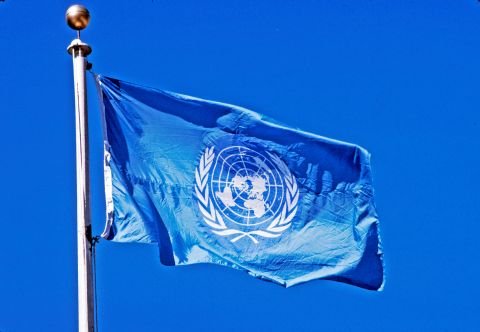
My teachers, like most others, frequently reminded us to never forget our basics. This lesson needs to be reverberated in the echelons of the United Nations (UN). Franklin Roosevelt, the chief architect of the UN Charter, remarked, “No plan is perfect. Whatever is adopted will have to be amended over the years.” It is time that the UN revisited its charter, if not draft a new one.
Well, there could be a short answer to our topical question. But this would wreak in the academicians and experts, and proponents of a certain kind of thought school who would, at the very first opportunity they get, call this geopolitical blasphemy. But to me, Sustainable Development Goal (SDG) number 16 among the larger set of 17 SDGs appears as a real blasphemy here. Though sanely utopian, it seems that the Agenda 2030 was given “2030” in its name because the powers that be just did not want to be bothered about having a progress update till 2030.
Evolving Irrelevance
The IRC 2026 Watchlist shows how the UN has failed to stop the 10 worst crises of 2026. The affected 10 countries (representing just 12% of the global population) account for 89% of those in humanitarian need. All that it has been able to do is just condemn the atrocities that have taken place. 2024 saw 8 vetoes being cast by UN Security Council (UNSC) Permanent members, the highest since 1986, highlighting a total paralysis regarding conflicts in Gaza, Ukraine, and Sudan. Then why is the UN still holding its head high?
The UN’s inability to address them shows that it is no longer a “universal” body but a bystander to this new era. Before it is able to rejig itself (though it is only minutely probable), many people would have lost out on such help, which cannot be reimbursed by publishing irrelevantly lengthy reports and white papers. UN Secretary General Antonio Guterres, marking the 80th Anniversary of the UN, noted, “At this moment, the principles of the United Nations are under assault as never before.” This level of acknowledgement could see many modern-day governments bearing the brunt of No Confidence Motions and similar apparatuses in their respective electorates.
A swarm of supporters could slap me with the achievements of the UN. But the UN was never supposed to be about accomplishing the bare minimum and calling it an accomplishment. You cannot provide drinking water to a populace and then pat yourself on the back for it. Is there any mention of Accountability in the UN charter? Maybe. And maybe, the mandates of the UN must no longer consist of “geopolitical stability” and related jargon.
Structural Paralysis: The Anachronistic UNSC
One of the fundamental issues causing this functional puncture in the UN is its foundational structure. A system that broadcasts natural justice tends to violate its very first principle through the anachronistic structure of the UNSC. Chapter 5 of the UN Charter set up this Council. It has 5 Permanent and 10 non-permanent members. The non-permanent members, being twice in strength, do not even wield half the power of the permanent P5, namely the US, UK, Russia, France and China. Clearly, four-fifths of humankind that live in the Global South, they say, have only one voice – China.
UNSC’s membership and working methods reflect a bygone era. Though geopolitics have changed drastically, the Council has changed relatively little since 1945, and it is not representative of the geopolitical realities of the modern world. This issue has been debated in the UN General Assembly (UNGA) ever since 1993.
As a corollary, emerging economies have gradually and consistently been voicing the need for a significant UNSC reform. The G4 – Brazil, Germany, India, Japan – and the Coffee Club (formally named Uniting for Consensus) have been at the forefront. Most Coffee Club members are middle-sized states that oppose bigger regional powers grabbing permanent seats in the UNSC, though it is not against the reform itself.
A Push for Reform
The G4 support each other’s membership bids along with a push to expand the Security Council from 15 to 25, including 6 new permanent seats. The Quincy Institute for Responsible Statecraft, drawing on over 100 leading scholars and former officials from more than 40 countries, including all P5 nations, arrived at a strikingly similar conclusion in 2024. As a separate bloc, the African Union, through the Common African Position, demands two African permanent seats with veto rights “as a matter of common justice.”
Among the G4, India has emerged as a compelling contender and leader of UNSC reforms on behalf of the Global South. Countries like Hungary, Eritrea, Kazakhstan, Tajikistan, Baltic countries, Iran and Greece have backed India’s candidacy back India’s permanent candidacy for the UNSC. However, this bid has faced contention from within the UNSC’s P5 by the consistent exercise of the hoary powers of Veto (bestowed exclusively upon the P5) by China. India has been vocal over the delay that this process is witnessing in reaching its logical conclusion. The Council on Foreign Relations has warned that the UN risks sliding toward irrelevance precisely because every credible reform proposal inevitably crosses a permanent member’s red line.
Why Change Remains Elusive?
Shashi Tharoor, a Member of Parliament and former Union Minister from India, remarks that, “The problem of reforming the Security Council is rather akin to a situation in which a number of doctors gather around a patient and all agree on the diagnosis, but they cannot agree on the prescription.” UNGA’s “Open-Ended Working Group”, formed to reach agreement on reform proposals, continued its debate for so long that it came to be known humorously as the “Never-Ending Working Group.” Patently, at the final stage, the UN Charter amendment to implement UNSC reform needs to be ratified by two-thirds of the UN member states, including all of the P5 states. A single veto-wielding power can stop international response dead in its tracks and totally frustrate the will of the overwhelming majority of the international community.
Simply put, the UN of today cannot and should not be represented by the UNSC of yesterday. The worn-out maxim of keep something pending till eternity, and it automatically dies out, will not be a remedy anymore. The urgency of this has not gone entirely unheard and the UN’s own Pact for the Future, adopted in September 2024, formally committed member states to developing a consolidated Security Council reform model. That even this commitment remains largely symbolic is perhaps the most telling indictment of all.
Conclusion
“The League is dead. Long live the United Nations!” The concluding session of the League of Nations ended with these famous words by Lord Robert Cecil, one of its original architects. It took one World War to render the League of Nations irrelevant and, more importantly, that irrelevancy being acknowledged, registered and acted upon swiftly. Nevertheless, the fact stares us in the face that an organisation doesn’t need a legal procedure to die.
Maintaining international peace and security is just about one of the objectives that this torpid organisation was mandated to achieve. There is already a plethora of debates about the UN’s utility in the realm of climate change and the environment at large. The idea that the UN still moves and talks, but has no soul or actual life-force left, is akin to Zombie Multilateralism.
The UN clearly seems to have lost its focus and locus. These cannot be regained or rebuilt amidst the luxury of the General Assembly week in New York. Fundamental, structural alterations in its vital organ, the UNSC, are the need of the hour and for the future. Secretary General’s remembrance of Brian Urquhart’s (one of the first UN staff) legacy as a war veteran reminds us that the UN was born from blood, and it needs to be reminded of its grit, which has been unfortunately replaced with docile bureaucracy.



Leave a Reply