

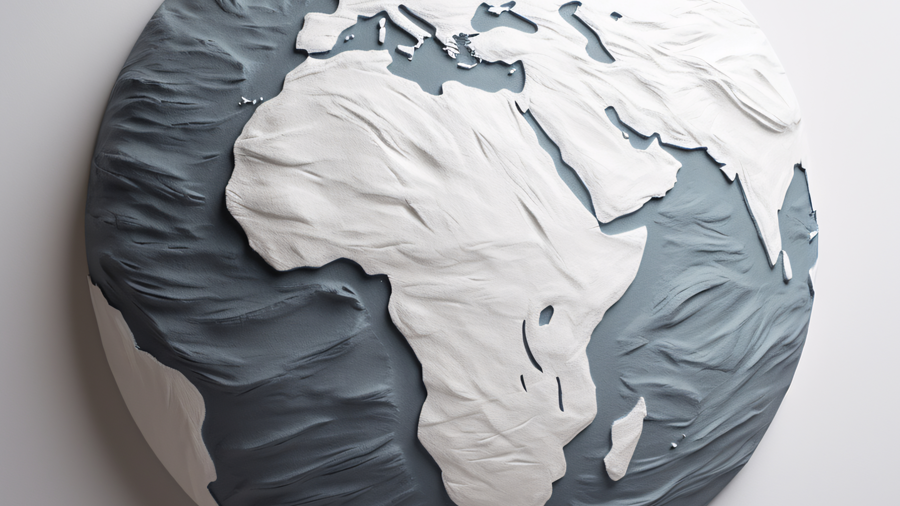
In a dynamic global landscape, India is sharpening its focus on Africa as it formally assumed the rotating BRICS presidency for 2026 on January 1, taking over the mantle from Brazil. With an expanded BRICS membership that now encompasses several African nations, India will be seeking to bolster South-South cooperation and provide a counterbalance to Western dominance in international institutions and organisational frameworks.
The theme for India’s presidency – “Building for Resilience, Innovation, Cooperation, and Sustainability” – highlights its commitment to developing people-centric solutions rooted in equity and collaborative multilateralism. India’s approach draws from a shared history of anti-colonial struggles, exemplified by historical legacies, and reflects on evolving relations that transcend mere symbolism.
India’s Africa outreach
Since 2014, India has pursued an “Africa First” policy, markedly expanding its diplomatic and developmental engagement across the continent. This approach has included the establishment of 16 new Indian embassies and a pledge of $12 billion in concessional credit to support infrastructure development in African countries.
In 2025, PM Modi undertook landmark visits to Ethiopia, Namibia, Ghana, Mauritius, South Africa, and Nigeria, aimed at strengthening deep, purpose-driven partnerships. These efforts built on earlier diplomatic momentum generated by President Droupadi Murmu’s visits to Algeria, Mauritania, and Malawi in October 2024, followed by Angola and Botswana in November 2025.
Together, these high-level engagements underscored India’s growing focus on defence cooperation with Africa, including counter-terrorism, maritime security, defence equipment supply, and joint military exercises. India also deepened collaboration in trade, healthcare, education, digital infrastructure, AI training, and UN peacekeeping. Notably, talks in Ethiopia emphasized trade and digital connectivity, while engagements in Ghana focused on expanding bilateral trade to $6 billion and establishing a vaccine manufacturing hub.
African leaders have responded positively to India’s role, perceiving it as a strategic counterweight to traditional Western influences. South African President Cyril Ramaphosa described the BRICS forum as a catalyst for recognising Africa’s developmental potential, while Ethiopian Prime Minister Abiy Ahmed emphasised mutual respect and fairness in relationships, pushing back against neo-colonialism.
Similarly, Nigerian President Bola Ahmed Tinubu lauded India as the “bridge of the Global South,” reflecting Africa’s aspiration for equitable partnerships during times of economic vulnerability.
The economic partnership between India and Africa is thriving, with bilateral trade reaching an impressive $100 billion in 2024, primarily driven by sectors like pharmaceuticals, agriculture, and energy.
India actively supports the African Continental Free Trade Area (AfCFTA), encouraging resilient supply chains and joint maritime exercises. The long-awaited India-Africa Forum Summit is anticipated in early 2026, further solidifying these relations.
Trilateral cooperation
India’s evolving partnership with Africa has gained strategic momentum following the India–EU Free Trade Agreement (FTA) concluded on 27 January 2026. Covering nearly two billion people and about a quarter of global GDP, the agreement significantly boosts India’s global economic standing while opening new avenues for Africa. By eliminating tariffs on over 96% of traded goods and expanding market access for Indian exports – especially from MSMEs – the FTA strengthens India’s manufacturing and employment base, with positive spillovers for African trade linkages.
Crucially, the FTA aligns with the EU’s Global Gateway initiative, creating scope for trilateral cooperation among India, the EU, and Africa. Indian firms can leverage African critical minerals such as cobalt and lithium for European markets, fostering local value addition and reducing dependence on China. African leaders view this partnership as a platform for equitable cooperation, particularly in sustainable infrastructure, climate finance, and debt relief, reinforcing Africa’s role in India’s broader global strategy.
As over 40 countries express interest in joining BRICS, including several African nations, India is poised to focus on reforms that will enhance representation for Sub-Saharan regions in global governance during its presidency.
Key areas include resilience concerning debt and food security, innovation through digital infrastructure, and cultural cooperation through the establishment of the New Development Bank and South-South collaboration.
Challenges
India’s BRICS presidency in 2026 presents a significant opportunity, but it is accompanied by complex internal and external challenges that could test New Delhi’s leadership.
Challenges dictated by geopolitical tensions came to the fore, with India adopting a cautious stance towards participating in military exercises like the upcoming “Will for Peace” in South Africa. This careful approach has been underscored by calls from leaders such as French President Emmanuel Macron for non-confrontational relations between BRICS and the G7.
A primary hurdle lies in the growing heterogeneity within BRICS itself. The grouping now encompasses countries with divergent political ideologies, economic systems, and strategic priorities. Bridging differences between established powers such as China and Russia and newly inducted members – particularly from Africa – will constrain and undermine consensus-building efforts on institutional reforms, development finance, and global governance.
Externally, India may encounter resistance from Western powers wary of BRICS’ efforts to reshape global power structures. Economic pressure, trade barriers, and diplomatic pushback could undermine India’s push for a more multipolar international order. Simultaneously, domestic constraints—including inflation, unemployment, and infrastructure gaps—may limit India’s capacity to commit resources to ambitious BRICS-led initiatives.
China Factor
A major strategic challenge stems from the Chinese interests and presence in Africa. China’s decades-long engagement through the Belt and Road Initiative has entrenched its influence across African infrastructure, resource sectors, and political networks.
This deep-rooted presence restricts India’s ability to rapidly expand its footprint. Moreover, China’s model – characterised by large-scale financing and swift project delivery – often appeals to African governments seeking immediate development outcomes, placing India’s more people-centric and sustainability-focused “Africa First” approach at a comparative disadvantage.
Within BRICS, competition for political influence in Africa further complicates India’s agenda. African states may find themselves balancing China’s economic dominance against India’s vision of equitable, multipolar cooperation.
To navigate these dynamics successfully, India must deploy nuanced diplomacy, offer credible development alternatives, and align African aspirations with BRICS’ collective goals. Effective leadership will depend on India’s ability to manage internal diversity, counter external pressures, and present a compelling, inclusive vision for the Global South.
On balance, one can say that India’s multifaceted engagement – blending historical ties with contemporary initiatives – presents a promising vision for Africa in an emerging multipolar world. As Kenyan President William Ruto aptly remarked, “We are facing forward, because that is where the opportunities are.” Taking the cue, India, through its current BRICS presidency, will sustain its engagement with Africa to promote an inclusive, equitable global order in which Africa occupies a central position.



Leave a Reply