

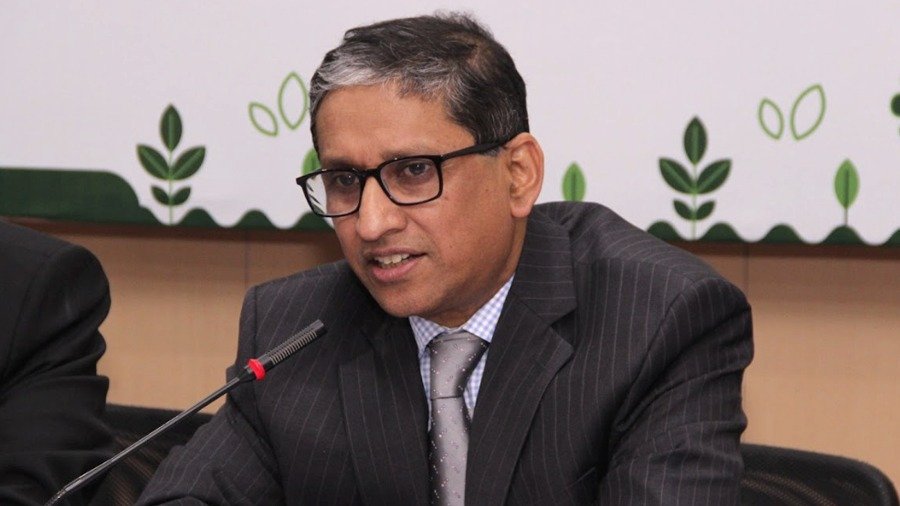
At the 7th Agri Business Conclave and Awards 2026, H.E. M. Riaz Hamidullah, High Commissioner of Bangladesh to India, offered a compelling perspective on the future of agriculture, calling for a shift from conventional thinking to more grounded, collaborative, and innovation-driven approaches across South Asia.
He began by underscoring a critical gap in global and regional discourse: “Increasingly, within diplomatic and development circles, agriculture does not receive the attention it truly deserves.” He noted that conversations are often limited to food security, while even nutrition security remains overlooked—reflecting a narrow understanding of a sector that underpins livelihoods, economies, and sustainability.
Moving Beyond Plans to Action
Highlighting the abundance of strategies and policy frameworks, he posed a fundamental question: how to translate intent into impact. “We have, by now, no shortage of plans… the real question is: how do we move beyond them?” he remarked. Emphasising experimentation, he added, “Let us test the ground… even if we fail, let us not fear failure.”
This call to action reflects the need for agility and risk-taking in addressing the complex and evolving challenges in agriculture.
Recentring the Smallholder
A recurring theme in his address was the need to refocus attention on smallholders, who form the backbone of agrarian economies but are often overlooked in policy and market structures. Referencing M. S. Swaminathan, he noted that it may be time to revisit the idea of a “farmers’ commission” to ensure that agricultural policies remain grounded in the realities of those who cultivate the land.
He cautioned against viewing agriculture solely through the lens of scale and profitability, arguing that such perspectives risk marginalising those most integral to the system.
From Cooperation to Collaboration
Drawing from Bangladesh’s unique position as the world’s largest delta, the High Commissioner emphasised the importance of moving beyond traditional cooperation frameworks. “Cooperation is a given; collaboration is where the real opportunity lies,” he stated.
He highlighted the role of MSMEs—particularly micro-enterprises—as potential disruptors within the agricultural ecosystem. Citing the example of iFarmer, a Bangladeshi startup now operating across multiple countries, he observed that innovation often emerges from outside traditional agricultural backgrounds. This, he argued, challenges conventional approaches and opens up new pathways for scalable impact.
Rethinking Agricultural Economics
A central concern raised was the economic viability of farming. “A fundamental issue we face is that farming is not yet economically viable enough,” he noted, pointing to shrinking arable land and increasing environmental pressures in Bangladesh.
With nearly 1 percent of arable land being lost annually and growing variability in water availability, he questioned the prevailing cereal-centric production model, asking, “What kind of agriculture are we really envisioning for the future?”
Innovation, Startups and Disruption
The address placed strong emphasis on the role of startups in transforming agriculture. He observed that many emerging enterprises in Bangladesh are addressing critical gaps in agri-logistics and value chains—often without traditional agricultural expertise.
This shift, he suggested, is essential for leapfrogging existing limitations: “We must move away from linear thinking and embrace disruption—particularly through startups.”
Climate Realities and Adaptive Farming
Climate change emerged as a key concern, particularly the growing threat of salinity intrusion in southern Bangladesh. With projections indicating significant risks to agricultural land, he stressed the need to reimagine agriculture at the intersection of water, climate, and sustainability.
Illustrating farmer-led adaptation, he cited the transformation of northern Bangladesh’s rice-growing regions into mango orchards. “This was not the result of policy design, but farmers’ own understanding of changing ecological and economic realities,” he said, emphasising that farmers are often ahead of policy in responding to change.
People at the Centre of Agriculture
While acknowledging the role of technology, he firmly stated that it cannot be a standalone solution. “Farming is ultimately about people,” he asserted.
He pointed to a generational shift, where younger populations are increasingly reluctant to engage in labour-intensive farming, opting instead for less risky and more diversified livelihoods. This, he suggested, signals a deeper structural transformation that must inform future agricultural strategies.
A Regional Opportunity
Looking ahead, the High Commissioner stressed the need for stronger regional collaboration in agribusiness and agritech. Despite South Asia’s vast knowledge base and innovation capacity—particularly in India—these strengths are not fully leveraged across neighbouring markets like Bangladesh.
“Can we co-create and co-curate solutions? The answer is yes—but it requires intent and initiative,” he affirmed.
He also called for greater engagement with startups and innovators addressing challenges such as soil health, fertiliser use, and input efficiency, noting that issues like soil toxicity present both risks and opportunities.
Towards a Resilient Agricultural Future
In conclusion, M. Riaz Hamidullah framed agriculture not merely as a sector, but as a dynamic ecosystem shaped by people, markets, technology, and climate realities.
“Agriculture must be viewed not just as a sector, but as a dynamic ecosystem,” he emphasised, urging stakeholders to move beyond conventional approaches and embrace collaboration, innovation, and experimentation.
He ultimately called for a pragmatic yet forward-looking approach—one that places farmers at the centre, leverages regional strengths, and builds resilience in the face of growing uncertainties.


Leave a Reply