

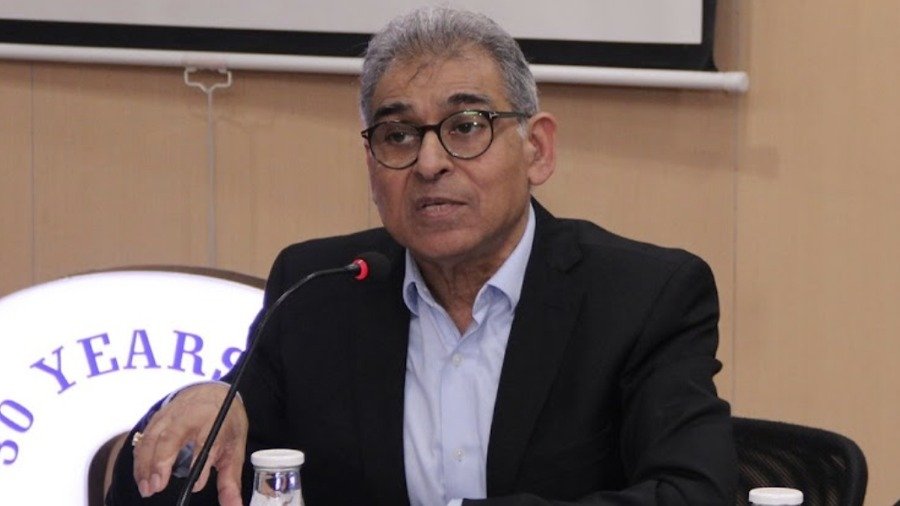
At the 7th Agri Business Conclave and Awards 2026, Dr. Paresh Verma, Director General, FSII – Federation of Seed Industry of India, highlighted the critical role of advanced technologies in shaping a more sustainable and resilient future for agriculture. He elaborated how innovation—particularly genetic modification (GM) and gene editing—can help address the pressing challenges of productivity, resource efficiency, and climate change.
Setting the context, Dr. Verma defined sustainability in clear and practical terms: “Sustainability in agriculture essentially means meeting present needs without depleting the resources required by future generations.” He emphasised that the goal is to “produce more with fewer resources—be it land, water, chemicals, or labour,” a principle that is increasingly vital in the face of shrinking resources and rising demand.
Proven Impact of GM Technologies
Drawing on over three decades of global experience, Dr. Verma pointed out that GM technologies have already demonstrated significant benefits. Deployed across more than 30 crops worldwide—particularly in staples like corn—these technologies have primarily focused on herbicide tolerance and insect resistance, helping farmers manage weeds and pests more effectively.
Citing global estimates, he noted that these innovations have not only improved productivity and farmer incomes but also delivered substantial environmental gains. Pesticide use has declined by nearly 750 million kilograms, while approximately 39 billion kilograms of CO₂ emissions have been avoided.
These outcomes, he asserted, clearly demonstrate that “the contribution of these technologies to bringing sustainability in our agricultural systems has been proven.”
India’s Experience: Gains and Setbacks
India’s own journey with Bt cotton serves as a compelling case study. For over two decades, the technology has contributed to higher yields, improved farmer livelihoods, and reduced pesticide usage. The country emerged as one of the world’s leading cotton producers and exporters.
However, Dr. Verma cautioned that this progress has not been sustained. Due to delays in adopting new innovations, the sector now faces renewed challenges. “We are back to a situation where in cotton, we are using as much pesticide as we were using before Bt cotton was introduced,” he observed. India has also reverted to being a net importer of cotton, raising concerns for the textile industry, a major source of employment.
Lessons from the Region
Regional experiences further reinforce the benefits of adopting advanced agricultural technologies. In Bangladesh, the introduction of Bt brinjal has led to a 60 percent reduction in pesticide use and nearly a six-fold increase in farmer profitability. Similar trends are visible in countries such as Brazil, South Africa, the Philippines, and Vietnam, where technology adoption has enhanced productivity while reducing environmental impact.
Gene Editing: A Complementary Tool
Addressing the growing interest in gene editing, Dr. Verma clarified a common misconception: “It is not a substitute for GM technology.” Instead, it should be viewed as an additional tool that complements existing technologies. The choice between GM and gene editing depends on the specific agricultural challenge at hand.
Gene editing offers several advantages—it is more precise, relatively cost-effective, and easier to deploy. India has taken a forward-looking step by introducing a progressive regulatory framework for gene-edited crops. However, challenges related to intellectual property rights continue to hinder large-scale commercialisation.
For example, although gene-edited rice varieties, including drought-tolerant strains, have been approved, their deployment is currently limited due to pending access to commercialisation rights.
The Road Ahead: Technology and Collaboration
Looking forward, Dr. Verma identified both immediate and medium-term opportunities. In the near term, GM-based technologies—particularly in cotton, oilseeds, and pulses—can be rapidly introduced to address yield gaps and reduce import dependence. This is especially crucial given that India imports nearly 60 percent of its edible oil requirements and a significant portion of pulses.
In the medium term, innovations aimed at climate resilience—such as drought tolerance, salinity resistance, and improved water and nutrient use efficiency—hold immense promise. Many of these technologies are already in advanced stages of development and could be deployed within the next few years with appropriate policy support.
Crucially, he emphasised the importance of partnerships: stronger collaboration between industry and public research institutions will be key to unlocking the full potential of these innovations.
Building a Sustainable Agricultural Future
Dr. Paresh Verma reiterated that technological advancement must be at the heart of agricultural transformation. Supported by enabling policies and collaborative frameworks, these innovations can help build a system that is not only more productive but also sustainable and resilient.
He made it clear that the future of agriculture will depend on how effectively science, policy, and partnerships come together to address the dual challenge of feeding a growing population while preserving the planet’s resources.


Leave a Reply