

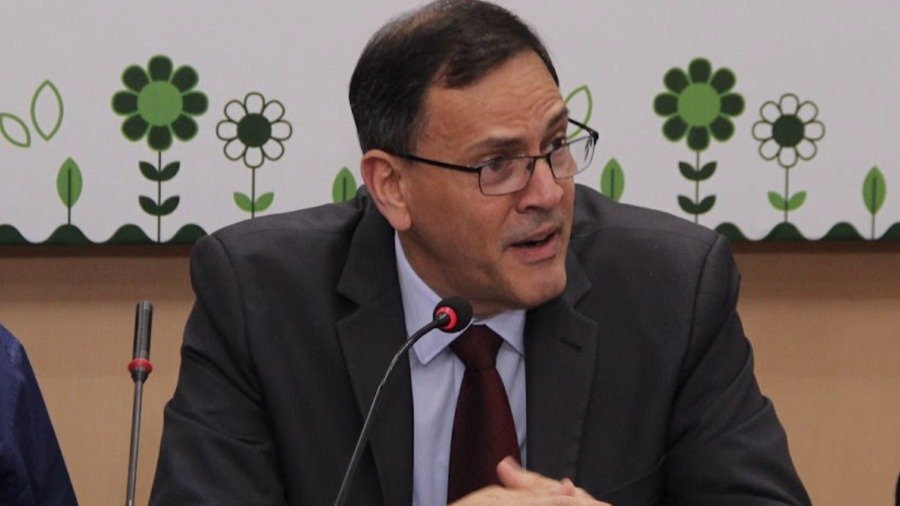
At the 7th Agri Business Conclave & Awards, H.E. Juan Carlos Marsán Aguilera, Ambassador of Cuba to India, offered a nuanced perspective on the role of agricultural cooperation in bridging regions, strengthening economies, and addressing shared global challenges.
Emphasising the importance of platforms that encourage dialogue and exchange, he highlighted their role in advancing meaningful international partnerships, noting, “The theme of this session—‘Agriculture Without Borders’—is both relevant and forward-looking.”
Drawing a comparative lens between India and Cuba, the Ambassador highlighted both contrasts and complementarities. India’s agricultural strength, marked by extensive arable land and a large workforce, stands in contrast to Cuba’s smaller scale of production and reliance on food imports.
“This contrast, however, also presents an opportunity.”
While India has achieved a notable degree of self-sufficiency and ranks among the world’s leading producers of rice, Cuba continues to import a significant portion of its food requirements. Yet, rather than framing this disparity as a limitation, the Ambassador positioned it as a foundation for mutually beneficial cooperation.
A key concern for Cuba, he noted, is the shrinking agricultural workforce—a consequence of the country’s long-standing investment in education and human capital. “Today, only about 18 percent—mostly elderly—remain engaged in agriculture.”
This structural shift, while enabling Cuba’s advancements in biotechnology and healthcare, has created new challenges in sustaining agricultural productivity.
Climate change, he emphasised, is another shared reality shaping agricultural futures in both countries. While India grapples with monsoon variability, Cuba faces increasingly severe hurricanes capable of causing widespread destruction within hours.
Despite these challenges, the Ambassador pointed to the enduring strength of India–Cuba relations, rooted in over six decades of trust and cooperation.
“Our approach is guided by a simple principle—a win-win partnership that is sustainable and forward-looking.”
This shared vision is reflected in collaborative efforts across sectors, including renewable energy. Cuba’s engagement with the International Solar Alliance and its recent expansion of solar capacity demonstrate its commitment to energy transition—an area where India’s experience offers valuable insights.
Importantly, the Ambassador reframed the discourse on agriculture by linking it directly to national priorities.
“For Cuba, food security is not merely an economic issue—it is a matter of national security.”
Looking ahead, he outlined a range of opportunities for Indian engagement in Cuba’s agricultural sector. From technology transfer and mechanisation to infrastructure development, the scope for collaboration is extensive. Recent policy reforms—including long-term land leasing, tax exemptions on machinery imports, and export flexibility—have further enhanced Cuba’s attractiveness as an investment destination.
He also highlighted Cuba’s strategic geographical advantage as a gateway to the Caribbean and Latin American markets, positioning it as a potential hub for Indian businesses seeking regional expansion.
At the institutional level, efforts are underway to deepen cooperation through formal mechanisms, including a proposed memorandum with India’s Ministry of Agriculture and increased bilateral exchanges.
Concluding on a note of resilience and optimism, the Ambassador reaffirmed Cuba’s determination to overcome present challenges. “Cuba will not only overcome its present difficulties, but will continue to grow and develop.”


Leave a Reply