

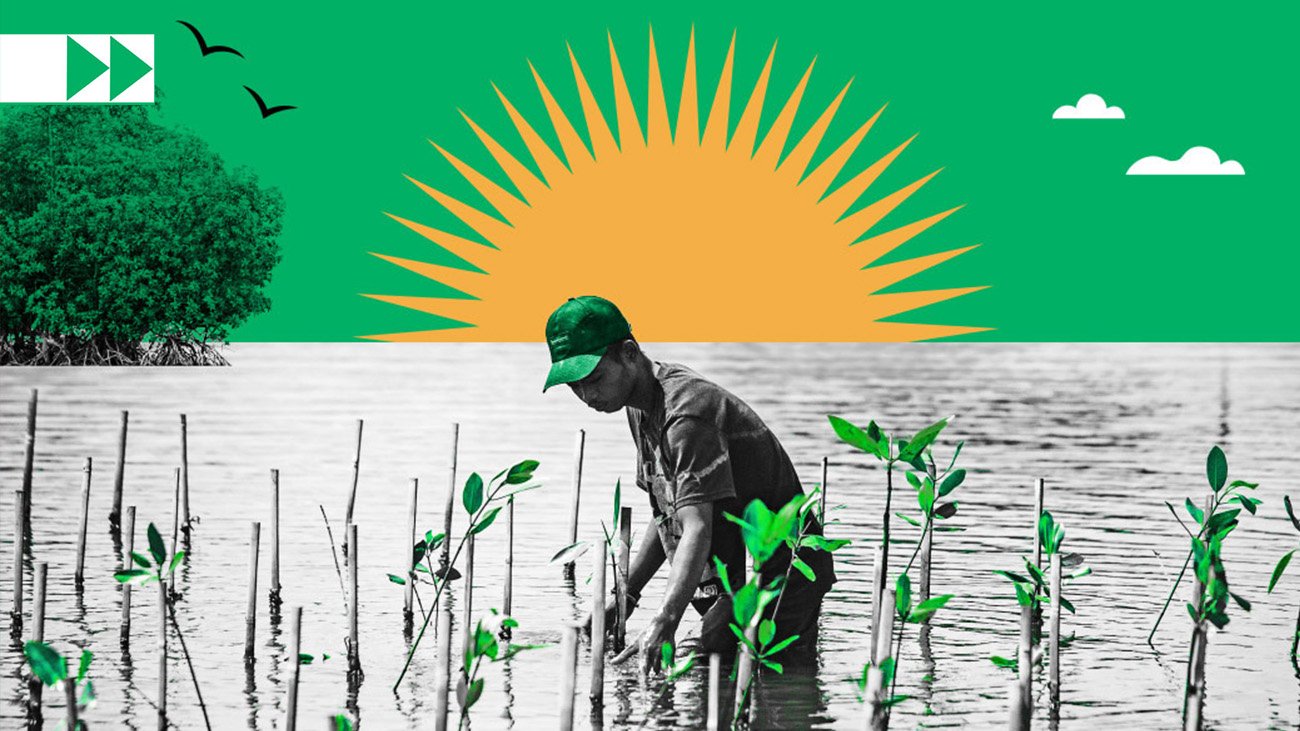
The era of climate predictions is over. We are now living inside the reality they foresaw. Now, the question is how we will change with climate change. In response, a powerful framework for action has emerged, built on three interdependent pillars: Resilience, Climate Adaptation, and Social Protection. Together, they form an indispensable foundation for securing a viable and equitable future.
Building resilience in vulnerable regions and communities
Over the past few decades, the amount of damage and losses caused by weather events has increased a lot. In the 1980s, the average was about $50 billion, but now it’s around $200 billion over the last ten years. The goal is to make these communities more resilient to the effects of climate change. Resilience is not built from concrete, but from community. It is the collective ability to absorb disruption, adapt to new realities, and ultimately transform.
Building resilience here is profoundly human-centred. It also requires ongoing efforts from various groups, such as local communities, national and regional organisations, and both public and private sectors. For instance, the process of aquaculture domestication of fish is a crucial intersection of scientific innovation and practical needs in sustainable aquaculture development. The basis relies on three key pillars: the pressing necessity to overcome production challenges which hindered the commercialisation of valuable native species, the potential of microalgae to transform aquaculture feed formulation and Conservation aquaculture, and the larger goals of conserving biodiversity, enhancing food security, and improving rural livelihoods in India.
Climate-proofing infrastructure, agriculture, urban systems, and water resources.
Resilient communities need a resilient physical world to inhabit. Our roads, bridges, and power grids were engineered for a 20th-century climate. Now we need roads that can take the heat, bridges that can withstand flood surges, and distributed renewable grids that keep the lights on even when the main lines fail. Water will also influence the impacts on different areas.
It’s clear that water must be a key part of adaptation plans, policies, and actions. Agriculture, the environment, and water, sanitation, and hygiene are focusing on making systems more resilient so they can handle future uncertainties. Northeast India, rich with water resources and aquatic biodiversity, has two global biodiversity hotspots that fall in this region, but it has the lowest per capita fish production among Indian regions, with most states producing less than 30,000 metric tons each year (Department of Fisheries, 2021).
Main concerns for water utilities in a changing water system include limits on how much groundwater can be taken when water tables drop, poorer water quality because water bodies can’t dilute pollutants as well, water shortages due to poor storage, and big damage to infrastructure after extreme weather events.
These problems lead to more health issues and people moving, which adds to the pressure on water utilities.
The changing seasons affect when water flows happen, creating uncertainty about how much storage is needed, especially in flood areas with many people. For example, changes in how much water is lost through evaporation and plant use, how plants take in sunlight for growth, and where pests and pollinators live can affect food production differently depending on the location. The main focus for adapting farming systems is to better deal with climate risks and changes in the environment. This includes best practices for managing soil moisture in rain-fed farming. Agricultural development needs to better include policies and projects that connect water, farming, and climate change.
Linking adaptation research, finance, policy and local implementation.
The real challenge is making sure the world’s plans and money for climate adaptation actually reach the people who need them. Success depends on connecting four critical things: research, finance, policy, and on-the-ground action. First, knowledge must be co-created. Scientists and communities must partner, blending climate data with indigenous insight to design relevant, trusted solutions.
Second, finance must reach the frontlines. Herein, introducing domesticated indigenous species into commercial aquaculture systems can help close this production gap and create jobs and income for small-scale fish farmers. Economic studies show that high-value native fish can yield profit margins 2-3 times greater than traditional carp farming, providing financial reasons for farmers to adopt these new species. This can support the goal of conservation aquaculture for indigenous aquatic genetic resources while promoting their sustainable use for food security and livelihood improvements.
This approach can improve the livelihoods of fishing communities in Assam, Meghalaya, Arunachal Pradesh, and neighbouring states who traditionally rely on wild fish. By enabling reliable seed production and offering training in hatchery operations and pond management, it will create new job opportunities and decrease the economic risks tied to falling wild fish stocks.
This can open up new provision of high-value species for regional aquaculture, enhancing food security and creating sustainable livelihood opportunities for farmers in Northeast India. Socially, it has the potential to enhance livelihoods for small-scale farmers across Northeast India, particularly by generating employment opportunities for women and youth in rural areas. The true success of climate adaptation is measured not by plans written, but by actions taken. It depends entirely on forging a direct, accountable link that turns global knowledge and finance into local security and strength.


Leave a Reply