

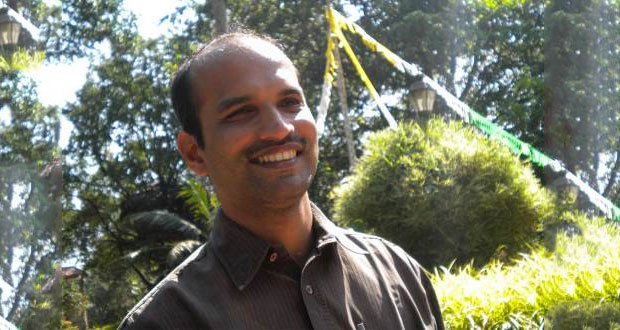
At the India–BRICS Dialogue 2026 held at The Habitat Centre, New Delhi, Dr. D. Dhanuraj, Founder-Chairman of the Centre for Public Policy Research, delivered a nuanced and candid assessment of the evolving role of BRICS in an increasingly volatile global order.
Dr. Dhanuraj captured the pace of global change with a striking metaphor: “It almost feels as though we are playing a five-day Test match or a T20 game, but attempting to compress it into a T10 format, events are moving that rapidly.” His remarks reflected the uncertainty and fluidity that currently define international relations.
Drawing from recent research and policy discussions, he emphasised that this is a crucial year for BRICS, particularly as India assumes the chair. While expectations were high following India’s dynamic presidency of the G20, he noted a more cautious approach this time. “We are silent, we are observing, we are watching,” he remarked, pointing to a phase of strategic recalibration.
Expansion and Internal Contradictions
With its expansion to 11 members, BRICS has undoubtedly increased its global weight. However, this enlargement has also introduced new complexities. Originally envisioned as a platform offering an alternative voice in the global order, BRICS now finds itself grappling with divergent geopolitical realities among its members.
Dr. Dhanuraj raised a critical concern: “In today’s conflicts, some of the major members are on opposite poles. How do we build consensus within such a grouping?” This question lies at the heart of BRICS’ future effectiveness. For countries like India, balancing strategic autonomy while engaging with a diverse bloc presents both opportunity and challenge.
He also pointed to an emerging critique of the grouping—that BRICS sometimes functions as a “safe haven” or “life raft” for countries facing geopolitical isolation. While this inclusivity can be seen as a strength, it also raises questions about whether the bloc is overly accommodating and hesitant to take firm positions on global issues.
Multipolarity and the Global South
The idea of multipolarity and the strengthening of the Global South remains central to BRICS’ identity. The 17th BRICS Summit emphasised the need for “more inclusive and sustainable governance” and a commitment to international law.
However, Dr. Dhanuraj urged a reality check. Despite strong declarations, translating these ambitions into coordinated action has proven difficult. As India leads the grouping this year, there is an opportunity—and perhaps a necessity—to redefine the BRICS agenda in line with evolving geopolitical dynamics.
Financial Architecture: Reform or Replication?
A significant portion of his address focused on the changing contours of global financial architecture. The establishment of the New Development Bank marked a major milestone, offering an alternative to traditional Bretton Woods institutions.
Yet, Dr. Dhanuraj posed a critical question: Is BRICS driving genuine reform, or merely replicating existing models? “When we assess the functioning of institutions like the NDB, it sometimes appears that they are following the same path as the IMF and the World Bank,” he observed.
The conversation around de-dollarisation also featured prominently. While not an explicit BRICS objective, trends indicate a gradual shift towards non-dollar transactions. However, he cautioned against overestimating this transition. “We talk a lot about alternatives, but the market still trusts the dollar,” he noted, highlighting the gap between policy discourse and economic reality.
Structural and Institutional Challenges
One of the defining challenges for BRICS, according to Dr. Dhanuraj, is its structural diversity. Unlike geographically cohesive blocs such as the European Union or ASEAN, BRICS comprises nations with vastly different economic systems, policy frameworks, and developmental priorities.
This diversity complicates efforts towards deeper integration. “These are distinct economies with different monetary policies and fiscal realities. It is not easy to create a common framework,” he explained.
Institutional coordination adds another layer of complexity. With no binding enforcement mechanisms, BRICS operates largely on voluntary commitments. This creates what he described as a “coordination deficit,” raising concerns about implementation, compliance, and long-term impact.
India’s Moment and Responsibility
As India takes on the BRICS presidency, Dr. Dhanuraj underscored the magnitude of the task ahead. India’s long-standing emphasis on a “humanity-first” approach could serve as a guiding principle, but translating this vision into actionable outcomes will require deft diplomacy.
He described the challenge as nothing short of formidable: “Navigating this environment will be a Herculean task for Indian diplomacy.”
Adding another layer of significance is the impending transition of the presidency to China next year. This shift could influence not only the direction of BRICS but also the broader geopolitical landscape, given China’s growing global influence.
The Road Ahead
Looking forward, Dr. Dhanuraj identified several priority areas where BRICS can make meaningful contributions: digital public infrastructure, climate and clean energy transitions, reform of multilateral institutions, and innovative financing for infrastructure and climate projects.
These domains, he suggested, offer the most practical pathways for BRICS to deliver tangible outcomes and enhance its global relevance.


Leave a Reply