

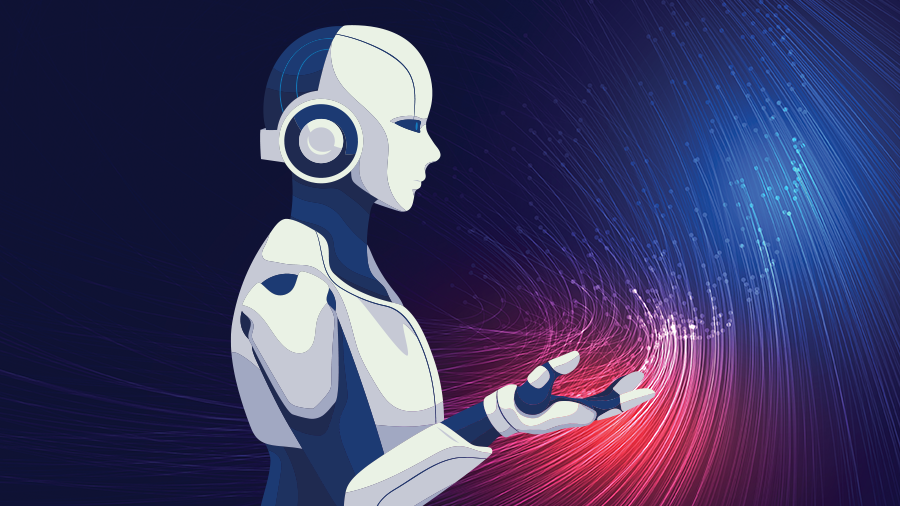
India is going to host the fourth Global AI Summit in New Delhi from 16 to 20 February 2026. This is also going to be the first Global Summit on AI in the Global South following the previous editions held in the UK (Bletchley, November 2023), the Republic of Korea (Seoul, May 2024), and France (Paris, February 2025). And this shift from Global North to Global South is not just about locus; it’s also very much about the focus of the Summit, which has shifted from cautionary ‘safety’ to desirable ‘impact’, as reflected clearly in the title of the Summit, i.e. AI Impact Summit 2026. The word to watch out for is ‘impact’! But what’s so special about this word?
The word ‘impact’ bears extremely significant and deep meaning for India and for the rest of the world, particularly the Global South. Why? Because it embodies the real essence of a technological intervention which, in current times, is being witnessed in the form of increasing development, deployment and use of Artificial Intelligence (AI) in our lives, societies and economies. It goes without saying that the scale and speed with which AI has impacted us has been unprecedented and is ever-rising!
Let’s take the Indian scenario! In the recently released ‘Global Artificial Intelligence (AI) Vibrancy Ranking’ by Stanford University, India has leapt to the notable third rank (from the previous seventh rank), behind only the US and China. India has also emerged as the world’s largest and most active market for large language model (LLM) adoption, according to an analysis by Bank of America (BofA), released in December 2025. The country is also the second-largest contributor to AI projects on GitHub. As per the IBM Global AI Adoption Index 2023, India led globally with 59 per cent of enterprises actively deploying AI, a higher rate than Western countries. Similarly, according to the 2024 BCG Report, India was leading in AI adoption as 30 per cent of Indian companies maximise AI Value (achieving AI Maturity at scale), surpassing the global average of 26 per cent. On the NASSCOM AI Adoption Index, India scores 2.45 out of 4, showing that 87% of enterprises are actively using AI solutions.
In the just-released report by BCG, it is stated that Indian consumers are leading the global shift toward using generative artificial intelligence (GenAI) in shopping decisions, with nearly two-thirds relying on AI tools to research products and brands before making purchases. Furthermore, India has around 1.8 lakh startups, and nearly 89% of new startups launched last year used AI in their products or services. This story of rising AI adoption across sectors is not of India alone! As of early 2026, global generative AI adoption has reached approximately 16.3% of the world’s population, with 24.7% usage in the Global North and 14.1% in the Global South and is on the ascendance.
In this context, the debate and discourse had to be moved beyond the issue of ‘safety’ alone to include the issue of how best to steer the AI design, development and deployment towards ensuring that it makes desirable impact on the People, Planet and Progress; the three Sutras (principles) on which the upcoming India AI Impact Summit 2026 has been anchored. These three guiding Sutras or principles are intended to frame how AI should serve humanity, safeguard the environment and drive inclusive growth.
In this endeavour, these sutras are being operationalised through seven Chakras or themes, each focusing on a critical dimension of AI’s global impact. The seven Chakras or themes are, namely, human capital; inclusion for social empowerment; safe and trusted AI; science; resilience, innovation and efficiency; democratizing AI resources; and AI for economic development and social good.
With the shift in focus from ‘safety’ to ‘impact’, India, as the Summit host, has already made a loud and clear statement! India sees AI as a transformative force with immense potential to accelerate socio-economic growth, and a force multiplier to drive an equitable, inclusive and sustainable development transformation; anchored in the three sutras of People, Planet and Progress!
The upcoming Global AI Summit is poised to advance an impact-oriented and people-centric approach to AI. Together, the Sutras and Chakras would provide a cohesive framework that would move the conversation from aspirational commitments to measurable outcomes. To ensure this, the Summit should strive for democratisation of AI and bridge the AI divide and in this exercise, AI must be made available as a horizontal, enabling technology that supports the development of humanity as a whole.
The exceptional speed and scale of AI adoption across sectors and across regions, despite the safety concerns, clearly testify that AI is all-pervasive and its impact is going to get more widespread! The need of the hour is to ensure that these impacts take place in the desirable positive ways and any unintended or harmful impacts are mitigated or minimised as far as possible through a human-centric, people-centric, responsible and inclusive approach taken both at the national as well as global levels.
AI is offering an unprecedented opportunity to leapfrog traditional developmental pathways. Through the multi-modal and multi-lingual capabilities of AI, access to benefits can be made available at scale. As a result, AI should not be seen merely as a technological advancement but as a strategic tool to enable inclusive, sustainable and equitable development across the globe.
The upcoming high-level convening marks a critical inflection point wherein it unshackles the fears perpetuated in terms of safety and aims to chart a path towards a future where the transformative power of AI serves humanity, drives inclusive growth, fosters social development, and promotes people-centric innovations that protect our planet. It also seeks to amplify the voice of the Global South, ensuring that technological advancements and opportunities are shared broadly, and not concentrated in a few regions or in a few hands. The broad theme of the India AI Impact Summit 2026, i.e. ‘Sarvajana Hitaya, Sarvajana Sukhaya’ or ‘Welfare for all, Happiness for all’, very aptly reflects this sentiment!


Leave a Reply