

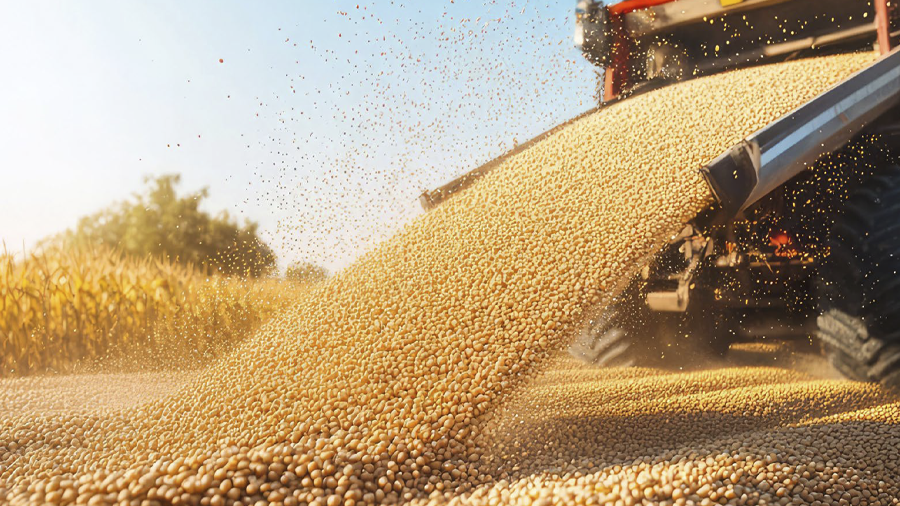
In an age where economies are interconnected as well as individuals are able to move among different nations, agricultural commerce is extremely crucial for a country’s security of food, economic development, improved standard of living for those living in rural areas, and good diplomatic connections. India requires foreign trade in agriculture since this enables the country to export more agricultural merchandise and provides farmers in the nation with a greater revenue. India serves as one of the largest manufacturers and exporters of farm commodities. It broadens up a lot of possibilities to be competent to tap into markets that are currently expanding swiftly, such as the Association of Southeast Asian Nations (ASEAN) and African countries. In agriculture, strategic agreements on trade and trusted trade ties might open up fresh markets that encompass everything from rice and spices to dairy products and horticultural commodities
India’s Agricultural Exports Landscape
India’s agricultural exports have been expanding steadily over the last decade, from $27 billion in 2013-14 to $52 billion in 2024-25. Indian exporters currently hold about 2.4% of the global agriculture trade, leaving substantial room for growth. Marine products, rice, and basmati remain the top exports; however, their export fell due to domestic restrictions and global tariffs. Whereas the imports are largely dominated by edible oils and pulses. The largest importers of Indian agricultural products as of FY25 were the USA, UAE, China, and Bangladesh. India’s agricultural goods exports to ASEAN are around $7.53 billion (2023-24), and 15% of Indian agricultural exports go to African countries. Various initiatives have been taken by the Government of India to boost its agri-exports through APEDA by organising B2B exhibitions. The government of India has also set up 13 Agri-cells in various Indian embassies in Vietnam, the USA, Indonesia, Malaysia, Singapore, etc., to provide real-time inputs for improved exports in these countries.
ASEAN: A Strategic Regional Market
The ASEAN bloc combines ten member economies with diverse demands for agricultural products, making it a suitable market for the export of Indian agricultural exports. India and ASEAN had long trade ties through the ASEAN-India Free Trade Agreement (AIFTA), which was signed in 2009 and implemented in 2010. The agreement aimed to reduce tariffs and facilitate the easy flow of goods, including agricultural produce, between India and ASEAN member states such as Indonesia, Malaysia, Vietnam, Thailand, and the Philippines.
Opportunities for Indian Agri-Exports:
Challenges for India in ASEAN markets
Although tariffs have been reduced, India’s agricultural exports to ASEAN continue to encounter difficulties and challenges. These consist of variations in regulations, barriers other than tariffs, the standard of the products that are being transported, and measures taken by SPS that may cause deliveries to take longer to arrive. India requires assistance with collaborating on inspection and quality protocols, procuring satisfactory agricultural products, and identifying reputable vendors for what it demands as they seek to solve the aforementioned issues. Farmers and exporters in India ought to seek ways to broaden their production that must be determined by what the market prefers, rather than solely grains and cereals.
Africa: A growing Frontier for Indian Agricultural Produce
African agricultural markets offer immense potential due to huge populations, rising incomes, and evolving food consumption patterns. Trade relations between India and Africa in agriculture have been expanded through various bilateral partnerships and regional economic initiatives like the African Continental Free Trade Area (AfCFTA). In 2008, with the first India Africa Forum Summit (IAFS), the Indian government launched a process of structured engagement with African countries.
The Duty-Free Tariff Preference (DFTP) Scheme for Least Developed Countries (LDCs) was announced in the first IAFS. India and Africa are working on doubling their trade by 2030, focusing on value addition, technology-driven agriculture, renewable energy, and healthcare.
Drivers of Opportunity in Africa:
It seems that there continue to be problems with non-tariff barriers, outdated infrastructure, opposition from other exporters, and various requirements for products. But the aforementioned issues could be solved by investing money into cold chain facilities, establishing e-certification systems, and turning customs procedures digital to stop agricultural goods from turning rotten. India needs to additionally concentrate on processed foods and other types of rice, as these are some areas where it could generate greater revenues and have a competitive advantage over its competitors.
Conclusion
India may ship more agricultural goods to ASEAN and African markets because of the trade arrangements between the two countries and the method by which the market is expanding. There continue to be certain challenges that need to be addressed, but proactive regulatory strategies, innovative trade diplomacy, and working collaboratively may bring up a lot of new possibilities. The Indian government should think about how constraining agricultural goods might affect India’s standing as an honest supplier of agricultural exports while it determines how it will meet the requirements of its people.
References:
Agripreneurship. (2024). Exploring bilateral trade agreements and their effects. Agriculture Institute. Retrieved from https://agriculture.institute/agripreneurship/exploring-bilateral-tradeagreements-effects
Indian Council for Research on International Economic Relations. (2025). Enhancing India’s agriexports to Africa: Opportunities and strategies (Suvangi Rath, T. Suntwal& A. Bhargava). Retrieved from https://icrier.org/publications/enhancing-indias-agri-exports-to-africa-opportunitiesand-strategies/
Market spotlight: ASEAN. (2025). India Brand Equity Foundation. Retrieved from https:// www.ibef.org/economy/quarterly-newsletter/market-spotlight-asean-q2
Rath, S., Suntwal, T., Rohatgi, A., Goel, K., & Gulati, A. (2025). Enhancing India’s agri-exports to
ASEAN: Opportunities and strategies (Report No. 25-R-15). Indian Council for Research on International Economic Relations (ICRIER). https://icrier.org/pdf/Enhancing-India-s-Agri-Exportsto-ASEAN.pdf
ORF Online. (2025). India–Africa partnership for agricultural development and food security. Observer Research Foundation. Retrieved from https://www.orfonline.org/research/india-africapartnership-for-agricultural-development-and-food-security




Leave a Reply