

Redefining Growth for a Resilient Future: Integrating Economy, Society, and Sustainability for a Resilient Future
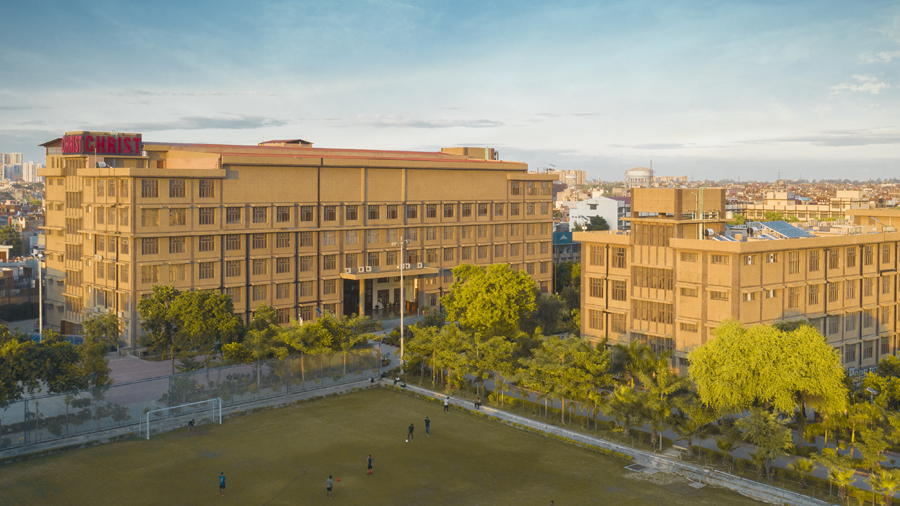
At a time when the world is grappling with overlapping crises—climate change, widening inequality, geopolitical tensions, debt distress, and technological disruption—the need to rethink traditional models of economic growth has never been more urgent. It is against this backdrop that the 2nd International Conference on Advancing Economics (ICAE 2026) will be held on 25–26 February 2026 at The School of Social Sciences, CHRIST (Deemed to be University), Delhi NCR Campus, in collaboration with the V. V. Giri National Labour Institute (VVGNLI), an autonomous body under the Ministry of Labour and Employment, Government of India.
Themed “Redefining Growth: Integrating Economy, Society, and Sustainability for a Resilient Future,” the conference seeks to interrogate the structural foundations of contemporary development paradigms and explore pathways toward equitable, climate-resilient, and socially just economies.
Rethinking Growth in an Era of Global Crises
For decades, growth has been narrowly equated with output expansion. However, accelerating climate risks, fragile labour markets, financial instability, and deep socio-economic disparities—particularly in the Global South—have exposed the limits of this approach. ICAE 2026 positions itself at the intersection of economics, public policy, sustainability, and global governance, fostering dialogue that moves beyond conventional metrics toward holistic measures of human well-being and ecological integrity.
ICAE 2026 aims to provide a platform for scholars, policymakers, civil society leaders, business innovators, and grassroots practitioners to collectively rethink development pathways. The conference aims to bridge academic research and actionable policy solutions, aligning discussions with global frameworks such as the Sustainable Development Goals (SDGs), the Paris Climate Agreement, and evolving multilateral sustainability initiatives. Importantly, it foregrounds India’s developmental experience while situating it within broader global transformations.
Thematic Focus
The conference features a rich array of themes and sub-themes that span economic, social, environmental, and governance dimensions. Key areas of discussion include:
These themes reflect the conference’s commitment to bridging economic theory with policy innovation and sustainability with social justice. Special attention is given to issues pertaining to India and the Global South, including climate vulnerability, inequality, urbanisation pressures, and water–livelihood linkages.
A Multi-Stakeholder, Global Dialogue
The conference brings together an impressive lineup of keynote speakers and resource persons from India and abroad. Among the distinguished speakers are:
Scholars and experts from institutions including JNU, Jamia Millia Islamia, Shiv Nadar University, Ambedkar University, IIM Sirmaur, and international universities across Europe, Australia, South Asia, and the Middle East are also participating.
The conference’s International and National Advisory Committees reflect its transnational character, with representation from Japan, South Africa, the United Kingdom, Nepal, Sri Lanka, Saudi Arabia, and Poland, among others.
Academic Rigour and Global Dissemination
ICAE 2026 invites academicians, researchers, policymakers, and practitioners to submit extended abstracts and full papers.
A Diverse and Engaged Audience
The conference is expected to attract a vibrant mix of:
With hybrid participation options for presenters outside Delhi NCR, the event aims to ensure inclusivity and international engagement while maintaining strong in-person academic exchange.
Institutional Strength and Collaboration
CHRIST (Deemed to be University), accredited with an ‘A+’ grade by NAAC, is known for its academic excellence, research culture, and global outlook. The School of Social Sciences at the Delhi NCR campus, established in 2019, has rapidly emerged as a dynamic hub for interdisciplinary scholarship in Economics, Political Science, and Media Studies.
The collaboration with V. V. Giri National Labour Institute reinforces the conference’s focus on labour, inequality, and policy-relevant research. Support from publication and media partners such as Atlantis Press (Springer Nature) and The Diplomatist enhances both scholarly dissemination and public engagement.
Toward a Resilient Future
More than an academic congregation, ICAE 2026 aspires to be a forum for strategic reflection and policy imagination. By integrating economic reasoning with social justice and environmental sustainability, the conference challenges stakeholders to rethink growth not as an end in itself, but as a means to secure human dignity, ecological balance, and long-term resilience.
In a world marked by fragmentation and uncertainty, platforms such as ICAE 2026 serve as vital spaces for constructive engagement—where scholarship informs diplomacy, policy meets evidence, and global conversations are rooted in shared responsibility for the future.


Leave a Reply