

I had the privilege of representing my country as Counsellor at the Indian Embassy in Moscow for three and a half years, from 2000 to 2004. During this period, I travelled to at least ten cities across Russia. Learning the Russian language helped me enormously to navigate the country, engage meaningfully with local stakeholders, and contribute more effectively to my responsibilities.
Seven areas stand out vividly in my mind, reflecting the significant inroads made by the Indian presence in Russia during that period.
First, I was amazed to discover that a Gujarati diamond merchant had located raw diamonds in a remote Russian territory and had brought with him a team of 50 trained staff to polish the diamonds on site. Operating in temperatures of minus 20 degrees Celsius, this was an extraordinarily adventurous undertaking, yet it proved immensely profitable. I am certain that this entrepreneur has since grown significantly in scale and stature.
Second, Indian pharmaceutical companies such as Dr. Reddy’s Laboratories, Ranbaxy, Sun Pharmaceuticals, and Shreya Life Sciences had firmly established themselves in Russia. They played a crucial role in supplying affordable and reliable medicines to the Russian population, creating goodwill and strong market trust for Indian pharma brands.
Third, Russian tourists used to arrive in large numbers through charter tourism to Goa every year. Very soon, Morjim beach became a favourite destination, complete with Russian-language menus and signage, reflecting the depth of people-to-people engagement.
Fourth, Indian restaurants were in great demand. Moscow alone had nearly a dozen, with St. Petersburg not far behind, indicating a growing appreciation for Indian cuisine and culture.
Fifth, there was tremendous enthusiasm for learning yoga, Indian dance, music, and the Hindi language. To meet this demand, the Indian Embassy established the Jawaharlal Nehru Cultural Centre, staffed with Indian experts who taught highly motivated Russian students with impressive learning curves.
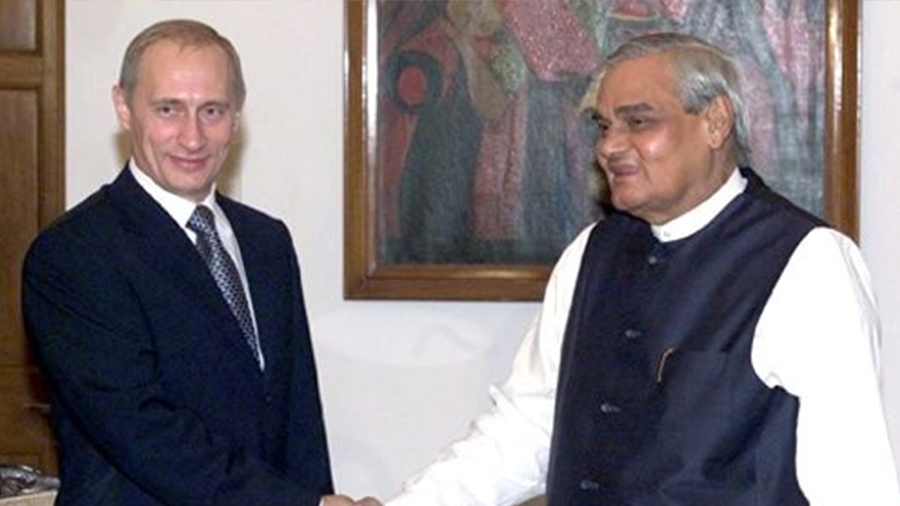
Sixth, at that time, there was only a makeshift ISKCON temple. During Prime Minister Atal Bihari Vajpayee’s visit in 2003–04, President Vladimir Putin granted land for the construction of a Hindu temple. Today, a grand place of worship stands there, frequented by large numbers of both Non-Resident Indians and Russian devotees.
Seventh, India and Russia enjoy a deep and strategic military cooperation agreement under which major defence procurements have traditionally taken place. I personally witnessed the conclusion of three landmark agreements covering all three defence services: T-90 tanks for the Indian Army, Sukhoi-30 aircraft in three variants for the Indian Air Force, and the retrofitting of Admiral Gorshkov into an aircraft carrier for the Indian Navy. The relationship has always been reliable and friendly, sustaining Russian defence factories, especially during periods of internal economic difficulty.
Based on this experience, I would like to suggest several practical steps through which NRIs can maximise their contribution and help unlock the full potential of Indo-Russian trade and commerce.
Russia is rich in minerals and metals such as silver, gold, diamonds, platinum, and titanium. India is deficient in many of these resources. NRIs, leveraging local contacts and on-ground knowledge, can facilitate access to these materials at reasonable prices, helping India conserve valuable foreign exchange.
While four Indian pharmaceutical companies had established a presence by 2004, the untapped potential remains vast for Russia’s population of over 140 million. NRIs can identify high-demand drugs, medicines, and medical devices and create synergies with Indian suppliers, ensuring a smooth supply chain. Additionally, they can identify reputed Indian hospitals known for medical tourism and help certify quality standards, encouraging Russian patients to seek treatment in India.
Recently, the learning of Hindi has received a significant boost under President Putin’s encouragement, while yoga, Indian dance, and music have captured the imagination of a wider segment of the Russian population. NRIs can help establish regional Indian cultural centres across Russia’s vast geography, giving further momentum to India’s cultural outreach.
While individual Indian restaurants are common in Moscow and St. Petersburg, no major Indian restaurant or hotel chains have yet entered Russian malls or large university campuses. Well-known Indian brands such as Haldiram and Bikanerwala could be introduced through franchising or joint ventures, meeting the growing demand for diverse Indian food offerings.
Inward tourism from Russia to Indian beaches has flourished for over three decades. Beyond this, India offers enormous potential in segmented tourism. NRIs can help promote trekking in mountainous regions, skiing in Kashmir and Himachal Pradesh, heritage tourism through forts and palaces, backwaters in Kerala, river rafting in Uttarakhand, and even destination weddings for affluent Russian clients.
The ISKCON movement has already created a valuable niche in religious tourism within an otherwise largely secular society. With increasing global interest in Ayodhya, Varanasi, Mathura, and the Shiva and Vishnu temples of South India, NRIs can curate dedicated religious circuits for Russian tourists who remain largely unaware of this vast spiritual heritage.
NRIs can also organise business expositions, networking events, and roadshows to enhance product awareness and boost bilateral trade. Familiarising Russian businesses with India’s UPI system and facilitating rupee–ruble settlements can significantly reduce transaction costs. Sectors such as food processing, textiles, machinery, and technology present major opportunities.
Mutual recognition of certifications is critical for expanding services trade. NRIs can bridge this gap through their professional knowledge and regulatory experience.
Investment opportunities in infrastructure, energy, logistics, and agriculture can also be stimulated through NRI engagement. Exports of marine products and animal fats require targeted support to meet quality standards, while tea, coffee, and spices from India have strong potential if effective marketing channels are developed in Russia.
IT and digital services are the strengths of both countries. NRIs can identify skill gaps, vet suitable suppliers, and facilitate long-term partnerships. Similarly, artificial intelligence offers immense scope for collaboration, provided appropriate use cases are identified.
India’s rapid growth in e-commerce presents another opportunity. Joint e-commerce platforms, enabled by NRIs with language and market familiarity, could significantly enhance bilateral trade.
Perhaps the most value-added idea is the establishment of gems and jewellery centres in Russia with NRI support. This would allow local silver, gold, and diamonds to be processed, polished, and crafted into jewellery sought after by Russia’s affluent consumers.
While the role of NRIs in defence cooperation may be limited, their contribution to sustaining goodwill through soft power is invaluable. In times of need, Russia has stood by India—as seen during Operation Sindoor—and such trust must be nurtured.
The sky is truly the limit for India–Russia relations, one of the longest-standing bilateral partnerships in the world. The only question is how quickly and how effectively we can remove existing cobwebs and unlock the full potential of this enduring relationship.



Leave a Reply