

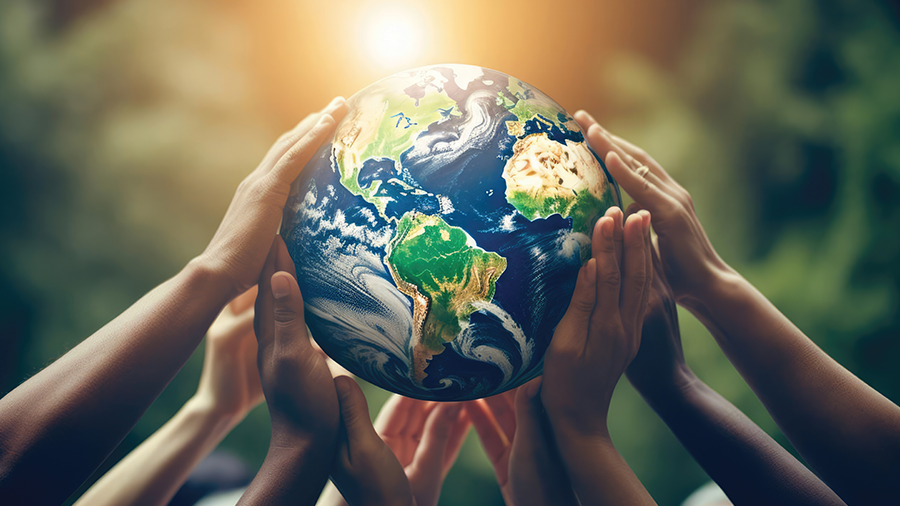
As 2026 begins, the international system finds itself at a decisive crossroads. The assumptions that once governed global politics—clear power hierarchies, predictable alliances, and stable institutions—are increasingly under strain. Climate shocks are intensifying, inequalities are deepening, conflicts remain unresolved, and technological disruptions are transforming societies faster than governance structures can adapt. In this unsettled landscape, the question confronting the world is no longer whether cooperation is desirable, but whether it can be meaningfully renewed.
The framework of Planet, People, Peace and Prosperity offers a compelling lens through which to understand today’s global challenges and the pathways forward. These four pillars are no longer independent policy domains; they are deeply interlinked realities shaping diplomacy, development, and decision-making across continents. Any credible roadmap for global dialogue in the present era must engage with all four—simultaneously and holistically.
Planet: From Climate Commitments to Climate Responsibility
The planetary crisis has moved from being a future risk to a present condition. Rising temperatures, extreme weather events, water stress, biodiversity loss, and pollution are no longer abstract scientific warnings but lived realities for millions. Despite decades of negotiations, the gap between climate ambition and climate action remains wide.
Recent global climate negotiations have preserved multilateral engagement but exposed persistent shortcomings—particularly on climate finance, loss and damage mechanisms, and timelines for fossil fuel transition. Developing countries continue to highlight the asymmetry between historical responsibility and current capacity, arguing that environmental sustainability cannot be divorced from developmental justice.
This is where the global discourse must evolve. The planet cannot be protected through fragmented pledges or selective responsibility. Environmental governance now demands integrated approaches that link climate action with energy transitions, urban planning, food security, and behavioural change. Sustainability is no longer an environmental issue alone; it is an economic, social, and strategic imperative.
Emerging economies, particularly in the Global South, are increasingly shaping this conversation—not as passive recipients of climate frameworks, but as active contributors of solutions. Their emphasis on equitable transitions, renewable energy expansion, and climate-resilient development reflects a broader demand: that planetary protection must advance alongside human progress.
People: Development as Dignity
At the heart of every global challenge lies the human condition. Inequality—within nations and between them—has become one of the defining fault lines of the 21st century. Access to education, healthcare, digital tools, and economic opportunity remains deeply uneven, undermining both social cohesion and political stability.
Development today is no longer measured merely by income growth or infrastructure creation. It is increasingly assessed by outcomes: whether growth translates into dignity, whether technology expands inclusion or deepens divides, and whether governance systems empower citizens or alienate them.
Digital transformation has emerged as a powerful enabler of people-centric development. Digital public infrastructure, financial inclusion platforms, and technology-enabled service delivery are reshaping how states interact with citizens. When designed responsibly, such systems reduce leakages, increase transparency, and expand access at scale. However, they also raise new questions around privacy, surveillance, and digital exclusion—underscoring the need for ethical frameworks alongside innovation.
Human development is also inseparable from education and skills. As artificial intelligence and automation reshape labour markets, global dialogue must focus on reskilling, lifelong learning, and the protection of vulnerable workers. Prosperity without people at its core is neither sustainable nor legitimate.
Peace: Beyond the Absence of War
Peace in the contemporary world extends far beyond ceasefires and treaties. It encompasses conflict prevention, humanitarian access, institutional resilience, and the ability of societies to manage differences without violence. Yet the global peace architecture is under significant stress.
Protracted conflicts, rising geopolitical rivalries, and the erosion of trust in international norms have complicated diplomacy. At the same time, non-traditional security threats—cyber warfare, misinformation, climate-induced displacement, and pandemics—are blurring the boundaries between war and peace.
Dialogue remains the most effective, if often undervalued, tool of peace. Diplomatic engagement, confidence-building measures, and multilateral forums provide spaces where competing interests can be negotiated rather than militarised. Even when consensus proves elusive, sustained dialogue prevents isolation and escalation.
A renewed commitment to peace also requires rethinking security itself—not merely as military deterrence, but as human security. Food security, health security, energy security, and environmental security are now central to stability. Societies that feel secure are less susceptible to conflict; states that invest in peace reap dividends in prosperity.
Prosperity: Rethinking Growth in a Fractured World
Global prosperity is undergoing a profound redefinition. The traditional engines of growth—trade liberalisation, industrial expansion, and capital mobility—are being reshaped by technological disruption, supply-chain realignments, and strategic competition. At the same time, the legitimacy of the global economic order is being questioned by those who feel excluded from its benefits.
Calls for reforming global financial institutions, trade regimes, and development financing are growing louder. The objective is not to dismantle globalization, but to rebalance it—making it more inclusive, resilient, and responsive to contemporary challenges.
Sustainable prosperity must align economic growth with environmental limits and social equity. Investments in clean energy, digital infrastructure, healthcare, and education are increasingly seen not as welfare expenditures, but as strategic assets. Countries that succeed in aligning economic policy with long-term resilience are better positioned to navigate uncertainty.
Prosperity, therefore, cannot be viewed in isolation. It is the outcome of sound governance, peaceful societies, empowered people, and a protected planet. Any roadmap for global dialogue that neglects this interconnectedness risks reinforcing the very fractures it seeks to address.
The Crisis—and Opportunity—of Multilateralism
Multilateralism today is both indispensable and embattled. Institutions built in the aftermath of World War II are struggling to adapt to a multipolar, digitally connected, and demographically diverse world. Yet despite frustrations, there is no viable alternative to collective action on issues that transcend borders.
What is required is not the abandonment of multilateralism, but its renewal. This includes reforming representation, updating mandates, and creating flexible coalitions that can respond to emerging challenges without undermining universal principles. Informal dialogues, track-two diplomacy, and cross-sectoral partnerships are increasingly complementing formal institutions.
Global dialogue must also move beyond state-centric frameworks. Businesses, civil society, academia, youth, and local governments are now integral actors in shaping outcomes. Inclusive dialogue is no longer optional; it is essential for legitimacy and effectiveness.
Towards a Shared Roadmap
The convergence of planetary stress, human aspirations, peace deficits, and economic transformation defines the present global moment. Addressing these challenges piecemeal will not suffice. What is needed is a shared roadmap—one grounded in dialogue, mutual respect, and long-term thinking.
Such a roadmap recognises that sovereignty and cooperation are not opposites, but complements; that development and sustainability must advance together; and that peace is both a prerequisite and a product of inclusive prosperity.
The future of global order will not be decided by domination or disengagement, but by the capacity of nations and societies to listen, negotiate, and collaborate. In this sense, dialogue itself becomes a strategic asset.


Leave a Reply