

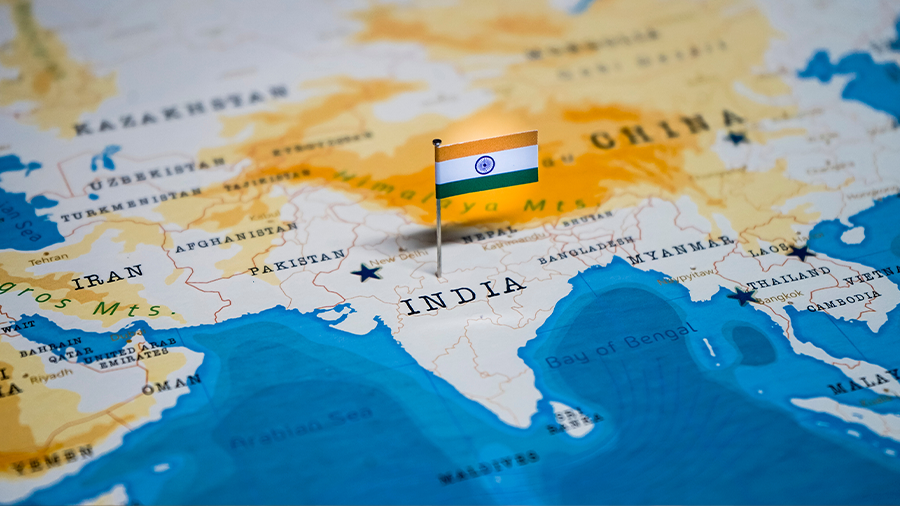
Contemporary trends have shifted the focus of the foreign policy–making process more towards trade, economic interests, and new strategic areas, moving from an ideology-based approach to a more pragmatic outlook. Recently, due to a sudden surge in regional conflicts across the globe and forebodings of over-expansionist missions by a few actors in international relations—with a number of neighbouring countries succumbing to the pressures of civil war and chaos—Indian foreign policy has started deepening its strategic and economic commitments and trade ties with East Asian neighbours.
By constructing an extensive network of ports and enhancing Coastal Surveillance Radar (CSR) systems, India is setting a clear path forward. Its leadership in finalizing cooperative frameworks within the IORA in the Indo-Pacific region has not only earned accolades but has also paved the way for future negotiations aimed at creating a robust shield against piracy, smuggling, cyber threats, and other non-state challenges. India’s commitment to inclusive diplomacy and international cooperation lays the foundation for a more secure, stable, and prosperous world. India’s foreign policy has always contributed to global security and prosperity. With its visionary leadership, strategic resilience, and adeptness at forging diplomatic alliances, India is uniquely positioned to lead the world toward a future defined by collaboration and mutual progress.
The purpose of this research paper is an attempt to analyse the determinants of foreign policy and their changing status, with special reference to recent changes in the global order. Besides, it will also examine how India has showcased its inner prowess, driven by its strength derived from the values of labour, honesty, truth, non-violence, dedication, determination, loyalty, and above all, trust creation. The purpose of foreign policy has always been to protect and promote India’s national interest and to facilitate the process of fulfilling its goals, while sustaining competitiveness through the engagement of strategic solutions and creating an environment for the fullest development of its image on the international stage.
India’s bold stand at the recent SCO (Shanghai Cooperation Organization) Summit 2025 reflects its zero-tolerance policy towards transnational terrorism. India’s firm conviction highlights that in a world where we are interconnected and confronting common challenges such as terrorism, violence, and insurgency, true collaboration necessitates shared principles and mutual respect—values that must remain uncompromised.
Besides, the ideas of peace and prosperity cannot coexist with terrorism and the proliferation of Weapons of Mass Destruction (WMDs). In an era marked by territorial conflicts and warfare across various regions of the globe, terrorist organizations from neighbouring areas have instigated a surge of anxiety in Kashmir, drawing media attention to the declining morale of mercenaries. This context sheds light on the recent nefarious schemes of these terrorist factions in different regions, mainly the 22nd April Pahalgam terror attack, which killed 26 tourists and left many injured.
The merciless killings of numerous civilians and Army personnel in the Valley during the last few years underscore the ongoing challenges the government faces in combating terrorism, despite the urgency of its anti-terrorism efforts, which have become a hindrance to the resolve to fight against terror. There is a pressing need to establish a comprehensive international framework to confront this menace head-on. At times, orientation changes through a fresh perspective and a framework for key demands, while maintaining synergy among various stakeholders to negotiate issues of differing perspectives, become paramount. India has always set a roadmap through diplomatic endeavour. Foreign relations are operated through efficient diplomacy, and diplomacy is all about the right gestures, cooperation, and coordination at times of crisis. India is indeed a leading partner in this regard.
India is a mature democracy, and its leaders are capable of capitalizing on opportunities and strategies that combine tactful strength and resilience. The issue that remains vital is bringing many neighbouring countries to the negotiating table to work out a strategy for maritime security and the protection of economic interests. The increasing support and agreement regarding limiting climate change issues and opening gateways for renewable energy, along with the development of technological know-how, channelizing sources of power generation, and creating mechanisms to withstand sudden threats posed by the BRI (Belt and Road Initiative), augur well for the peace and prosperity of all member countries.
There has always been a series of extremely good relationships between India and its neighbouring countries with regard to trade share, which has crossed a decent landmark during the last half-decade—far more than expected. Recent efforts by India to protect the Indian Ocean Area’s security through cooperation would further boost and cement these ties and create a genuine environment for stabilizing economic growth (along with ensuring the free flow of goods and services), strategic security, prosperity, stability, and combating sudden challenges arising due to climate change and maritime and border threats.
Further, the panel discussion focusing on “The Quad Squad: Power and Purpose of the Polygon,” during early 2023 provided another step towards addressing expansionist plans. The member countries showed their commitment to supporting Pacific Island countries and regional institutions through cooperation in several areas, including climate change, resilient infrastructure, and maritime security, to strengthen the Indian Ocean Rim Association (IORA).
In order to counter the increasing tentacles of Chinese aggressiveness endangering India’s maritime security through the Belt and Road Initiative (BRI), the deployment of naval bases in Indian Ocean areas, the naval base in Djibouti, and the construction of Gwadar Port to support Pakistan—along with its “String of Pearls” policy through which China is encircling India—India has reached out to neighbouring countries such as Sri Lanka, Bangladesh, Maldives, Seychelles, and Mauritius, and has adopted defence strategies of developing coastal radar systems among these countries. Besides, it has already started a fusion system to provide information related to the security of the Indian Ocean Region.
The recent procurement of the India–Russia joint venture BrahMos supersonic cruise missile for the Indian Navy and aero-engines for MiG-29 jets are major initiatives enhancing India’s defence capabilities. India has also developed a “Necklace of Diamonds” strategy, under which there is a vision of establishing a Changi naval service base in Singapore, Chabahar Port in Iran, and ports in Myanmar and Oman. India is moving ahead with its Act East Policy to enhance economic and trade cooperation among East Asian neighbours, in addition to developing an extensive web of ports and Coastal Surveillance Radar (CSR) systems.
India’s recent strategy has set out a clear way forward by getting fully involved in new techniques and developing challenging strategies to meet the needs of all partners. The role of India’s leadership in finalizing IORA initiatives in Indo-Pacific areas has been greatly appreciated and is becoming even more important due to its impeccable reputation. Further negotiations may lead to the creation of a strategic mechanism to provide a shield against maritime insecurity, piracy, drug trafficking, armed robbery, terrorism, international crime, smuggling, and cyber threats unleashed by non-state actors as well. This may also accelerate maritime-friendly ties and bolster security around the Indian Ocean and Indo-Pacific areas, which have lately become areas of concern.
Hence, collaborative partnerships among nations around the Indian Ocean Area, through equity and access for those in need during unprecedented crises, may demonstrate insight into empowering and motivating people across the board to extend helping hands and save lives. Besides, the pursuit of promoting well-being would lead to tremendous efforts towards enhancing the overall development scenario in India and neighbouring countries.
Looking ahead, the success of these initiatives hinges on the ability of nations to rise above geopolitical rivalries and work together for the common good. It is crucial to nurture a global mindset. Embracing this ethos can pave the way for a more secure, stable, and prosperous world. The responsibility lies with nations to uphold the principles of peace, justice, and equality, steering away from the temptations of power politics. Through concerted efforts, a harmonious world order can emerge, where nations collaborate not only for their own interests but for the well-being of humanity.
In this journey towards a brighter future, India’s role as a mediator and proponent of cooperation will be instrumental. By championing the cause of inclusive diplomacy, India has the potential to shape a world that truly reflects Louis Armstrong’s sentiment—“What a Wonderful World.” As nations navigate these complex times, it is the shared commitment to a common destiny that will ultimately determine the course of international relations, ushering in an era of prosperity and peace.
There are areas where strong relations can generate development funds for integrated strategic planning to deal with threats posed by various nations across the globe. The tremendous success of India in handling recent responsibilities at global platforms such as the G20 Presidency, the Quad Group, and as Chair of Interpol and the SCO (Shanghai Cooperation Organization) has provided a plethora of opportunities for India to undertake in-depth analysis and systematic examination of the myriad problems of international relations, and to make sincere efforts to find solutions and fill gaps in existing strategic frameworks.
There are numerous threats looming large across the globe, threatening the foreign policy domains of almost all countries. The secretive missions of intruders and the creation of cognitive dissonance through relentless application of evolving strategies, with feedback from deployed personnel and constant interactive communication with various branches dealing with law-and-order maintenance on a daily basis, pose serious challenges. What is required is the development of a fresh perspective for a more mature reliance on international cooperation among nations to enunciate new strategies of retaliation, threatening severe responses to any attempt to destabilize the world order. India is undoubtedly at the helm of international affairs and, therefore, can play a pioneering role in establishing a new framework for international relations.



Leave a Reply