

What exactly is intelligence? Is it intellect, wisdom, or something else related to mental capacity? Although there may not be a fixed or final answer to this highly ambiguous question, a common understanding of intelligence largely converges around one’s knowledge about a thing or something else, in association with his or her experience practiced for a particular end. While knowledge may be a collection of information regarding anything, desirable experience always helps to make that knowledge more useful and relevant in streamlining or better organizing meaningful human efforts aimed at providing service for the betterment of humanity or even its perfection, because experience may be either good or bad.
Thus, knowledge combined with genuine or meaningful experience will essentially simplify our purposeful actions, leading toward welfare or goodness, and resulting in perfection—or, in other terms, intelligence or wisdom. Evidently, the above reasoning is inevitably connected to the natural evolution of our mental capacities emerging today from the long past, or since the origin of Homo sapiens. While other organisms or creatures, however small or large, are also blessed with regulatory as well as developmental mechanisms characterized by a brain–mind analogy that entirely controls their body systems, their calculative experience may or may not be of the same kind that human beings uniquely possess, perhaps due to being the best creature in this world, blessed with the most advanced cranial powers unavailable to any other organism upon Mother Earth.
A few animals, such as cows, chimpanzees, tigers, lions, and even snakes, have been observed at particular moments to behave in a more restrained manner, which perhaps manifests a degree of superior intellect similar to humans, though only to a small extent and at a transient phase. Such behaviour cannot be generalized or established as their common behaviour while interacting with other creatures, including human beings. As a matter of fact, although such abnormal or even offensive behaviours are also committed by humans, they are not common or general examples.
In fact, intelligence can be easily understood as a simplifying mental exercise meant to ease various routines or events emerging at different stages of our life journey, as reflected in their day-to-day recurrence, and in overcoming the usual hardships inherent therein. For this purpose, while available theoretical knowledge can be helpful—and thus education is indeed very much required—uneducated persons may also display wisdom or intellect and prove to be intelligent in successfully tackling the common and usual difficulties that arise during daily routines. Hence, intelligence or wisdom is obviously necessary to simplify the normal and routine course of life in this world. But where does it come from, or how does it originate?
As discussed above, intelligence is a natural part and parcel ingrained within the brain, commonly depicted as the mind, wherein it evolves with onward progress while accumulating experience to collectively reflect as wisdom or intellect. While the mind is commonly considered a form of energy, intelligence, as discussed, is a manifestation of wisdom combining knowledge with experience, of course in a good or genuine sense. Obviously, it is a natural product, as the human body has been consistently evolving since the origin of the human species.
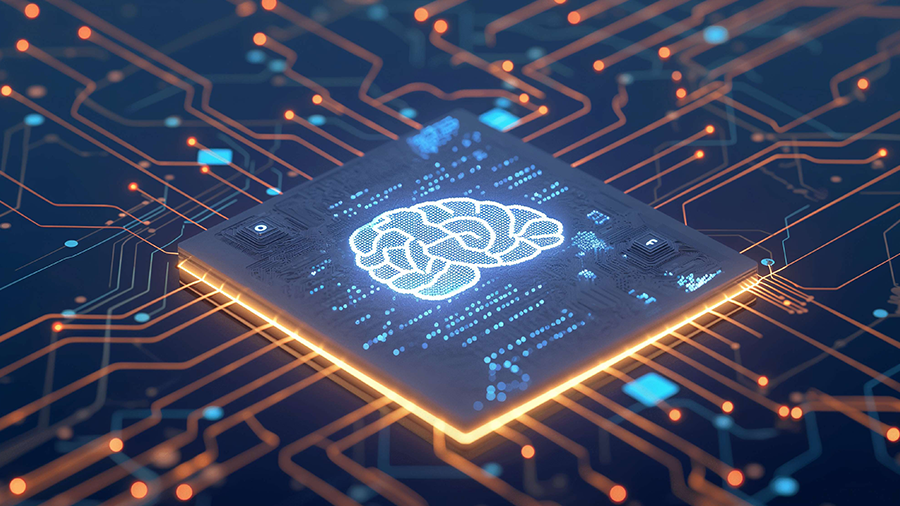
What, then, is artificial intelligence? The term “artificial” itself explains the meaning, as it refers to a kind of intelligence that is created or manufactured by human beings while drawing parallels between the brain–mind union and the computer hardware–software union. While the natural union of the former is evolutionary, the latter union is increasingly being crafted by human intelligence or wisdom itself to manifest its natural counterpart as much as possible or practicable. Evidently, since all human efforts are limited, the devised artificial intelligence may also remain limited in its capacity and performance. Yet this technology is increasingly becoming useful with the passage of each day, as rising challenges and tensions in daily routines are assuming alarming proportions. A common person, often devoid of sufficient income and other forms of material power, finds himself or herself unable to cope with these hardships or threats and has inevitably become the worst sufferer due to consequent helplessness or dilemma.
These increasing routine challenges and threats faced by ordinary people at large, as opposed to a few VVIPs or mega-rich giants like the Ambanis or Adanis in India—though they too face different kinds of tensions—demand a simplifying mechanism or device that can organize numerous routine priorities to ease ever-mounting challenges and threats to day-to-day material life. The present temporal world is increasingly becoming more complex, creating tremendous challenges and threats in everyday existence. Declining character, rising indiscipline, and excessive indulgence in baser material and consumerist charms for transitory sensual pleasures—devoid of metaphysical and spiritual discipline—are collectively contributing to a rapid decline in individual and social standing within human societies in India and beyond. This, in turn, is engendering socio-economic inequalities, political unrest, and climate injustice.
All these factors—inter alia, among others—may be considered potential reasons for large-scale and grave disorders manifesting as rising pollution and environmental degradation, violence and terrorism, crimes against women and children, mounting corruption, and insecurity, thereby adversely affecting normal life and livelihoods. These challenges must be supplemented by metaphysical and spiritual knowledge promoting universal values and ideals to make this precious human life meaningful and in consonance with the purpose of the soul’s journey.
Thus, based on this conceptual exploration of intelligence—both natural and artificial—artificial intelligence may be considered the art of progressive simplification aimed at streamlining entire human endeavours. Whether it originates in the biological mind or a silicon chip, its highest purpose is to streamline human efforts, reduce suffering, and provide a structured path toward the betterment and perfection of humanity. In this context, artificial intelligence is not a replacement for human wisdom but a necessary tool to help humans maintain their individual and social standing in an increasingly chaotic temporal world.


Leave a Reply