

India and China share a relationship shaped by both cooperation and competition. The two countries do not always agree on political or security issues, but they do work together in some areas. Both nations support a multipolar world where no single superpower dominates global affairs. They also cooperate in groups such as BRICS and the Shanghai Cooperation Organization, which try to balance Western influence. In addition, India and China share concerns about threats like Islamist terrorism, which affects peace and stability across Asia. But behind these areas of agreement, there is also growing competition.
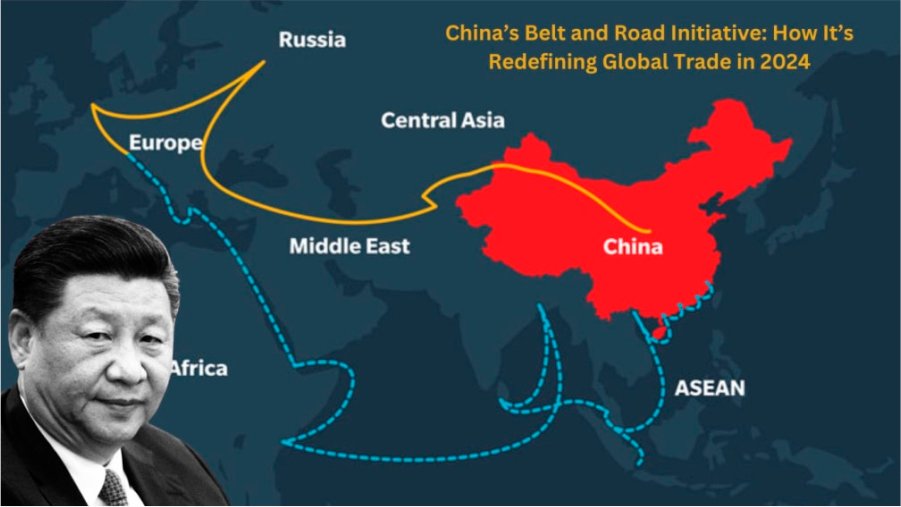
China’s Belt and Road Initiative (BRI) is expanding quickly across South Asia, giving China a major economic presence in India’s neighbourhood. As China builds highways, railways, ports, and energy projects across the region, India is responding by creating its own development plans and partnerships. This growing competition—China’s Belt versus India’s Alternatives—has become one of the most important foreign policy issues in South Asia today.
It is in this context that Indian Prime Minister Narendra Modi’s recent visit to China becomes meaningful. It was his first visit in seven years. This visit happened after both countries made efforts to calm tensions along the border. But it was also influenced by India’s changing relations with other major powers. Relations between India and the United States became tense after the Trump administration-imposed tariffs on Indian goods. This created new pressure on New Delhi to keep its diplomatic choices open. For India, improving communication with China is not only about reducing border tensions—it’s also about maintaining balance in a changing world.
Another important factor is that Russian President Vladimir Putin visited New Delhi in December, at a time when India’s long partnership with Russia has become more complex. Russia’s war in Ukraine has brought Moscow closer to Beijing. This new closeness between Russia and China affects India’s strategic position. All of this makes India more aware of China’s actions in South Asia and more determined to offer strong alternatives to China’s growing presence.
The new developments show that India’s engagement with China is much broader than just border talks. It is a long-term effort to shape the future of South Asia. India wants stability, cooperation, and peace, but it also wants to make sure that no single country dominates the region. This is why India’s response to its alternatives to China’s Belt is so important. China has become a major economic force in South Asia through its Belt and Road Initiative, offering large loans and building roads, ports, bridges, airports, and power projects in countries such as Pakistan, Sri Lanka, Bangladesh, Nepal, and the Maldives. These projects, like CPEC in Pakistan, the Hambantota Port and Colombo Port City in Sri Lanka, major energy plants in Bangladesh, and hydropower sites in Nepal, are welcomed by many neighbours because China delivers fast and large-scale development with fewer conditions than Western lenders.
At the same time, China’s growing presence has raised concerns about debt dependence, strategic influence, and the possible military use of some ports, especially after Sri Lanka leased Hambantota Port to China for 99 years. For India, the biggest worry is that CPEC passes through Pakistan-occupied Kashmir, which it claims as its own territory. Still, India seeks to manage these concerns through dialogue and diplomacy with China, while also strengthening its own partnerships in the region to maintain a stable and balanced relationship.
India has several concerns about China’s growing presence in South Asia. It worries that some Chinese projects pass through disputed areas, creating sovereignty issues, and that smaller countries may fall into heavy debt if they borrow too much from China.
India is also cautious about ports and highways built by China that could have military uses, and it fears losing influence in a region where it has traditionally played a leading role. At the same time, India understands it cannot block China completely, since China is one of its biggest trading partners, shares a long border with India, and works with India in major global organisations. Because of this, India follows a balanced approach; instead of opposing China everywhere, it offers its own development alternatives so neighbouring countries can choose between the two powers. This strategy helps India protect its interests while keeping peace and stability in the region.
India’s response to China involves several important steps, including building better connectivity, giving financial and development support, working with regional groups, and partnering with global powers. To improve regional links, India is developing major projects such as the Chabahar Port in Iran, which provides access to Afghanistan and Central Asia, the India – Myanmar- Thailand Highway that connects India to Southeast Asia, and the Kaladan Project linking India’s northeast to Myanmar’s Sittwe Port. India is also modernising its internal transport network through programmes like Sagarmala and Bharatmala. Beyond infrastructure, India provides strong development assistance to neighbours through grants and low-interest loans, supporting key projects in Sri Lanka, Bangladesh, Nepal, and the Maldives, including major energy, transport, and connectivity initiatives. India also works through regional groups such as BIMSTEC, the BBIN Motor Vehicles Agreement, and the Coalition for Disaster Resilient Infrastructure to encourage cooperation and reduce dependence on any single country. In addition, India partners with global powers like the United States, Japan, and Australia through forums such as the Quad to promote high-quality infrastructure alternatives to Chinese financing.
At the same time, India keeps open communication with China. Even though the two countries compete for influence, they continue diplomatic and military talks, especially after the 2020 Galwan Valley clash, because both understand that peace along the border and stable trade relations are essential. By balancing cooperation, competition, and diplomacy, India tries to protect its interests while maintaining a stable relationship with China.
Most South Asian countries prefer to maintain good relations with both India and China because they want development, investment, and better connectivity from both sides rather than being forced to choose between them.
For India, the main challenge is to complete its projects on time and maintain the trust of its neighbours, while China must show that its growing presence in the region is not meant to dominate or pressure other countries. If India and China act responsibly and respect each other’s interests, South Asia can enjoy greater peace, stability, and economic growth, benefiting from the positive aspects of both cooperation and healthy competition between the two Asian powers.
India has emerged as a reliable and responsible partner in South Asia by offering development that is sustainable, transparent, and sensitive to the needs of its neighbours. Unlike China’s loan-heavy projects under the Belt and Road Initiative, India provides grants, low-interest loans, and essential support that avoids trapping countries in long-term debt. Projects like the Chabahar Port, the Kaladan Project, and the Greater Male Connectivity Project show that India focuses on practical regional growth rather than strategic pressure. India also responds quickly in times of crisis, as seen in Sri Lanka’s 2022 economic collapse, when India provided over $8 billion in urgent assistance.
Through regional groups like BIMSTEC and agreements like BBIN, India encourages cooperation and shared progress instead of dominance. By promoting trust, stability, and respectful partnership, India offers South Asia a development model that supports sovereignty, strengthens regional unity, and ensures long-term peace and prosperity.
The idea of “Belt & Alternatives” reflects how South Asia is changing, as China’s Belt and Road Initiative brings major development opportunities but also creates strategic concerns, while India’s alternative projects offer countries more choices, reduce dependence, and strengthen regional partnerships.
Both India and China now play key roles in shaping the region’s future, with China providing large-scale infrastructure and fast investment, and India offering trusted support through grants, soft loans, and long-term cooperation that respects local needs and sovereignty.
Together, China’s economic power and India’s regional experience give South Asian nations a broader range of options to pursue growth on their own terms. But lasting peace and prosperity will depend on how responsibly both countries manage their relationship—choosing cooperation over conflict, balance over dominance, and development over rivalry. If India and China respect each other’s interests and act with maturity, development can become a unifying force, allowing South Asia to enjoy greater stability, connectivity, and shared progress.



Leave a Reply