

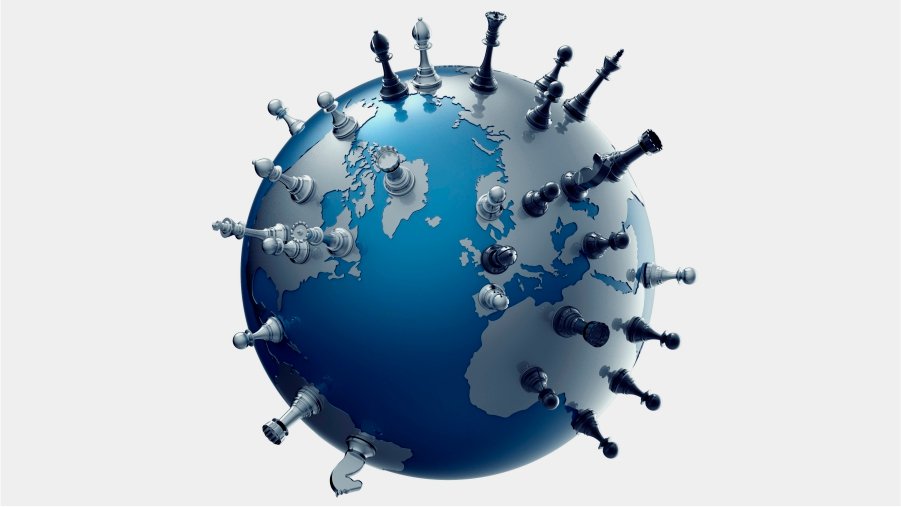
Globalisation in the Reverse Gear
In today’s turbulent global geo-political environment, “The Times They Are a-Changin’,” the classic 1964 song by Bob Dylan—one of the greatest songs of all time—has become more relevant than ever before. A world that was slowly recovering post–COVID-19 suddenly received shocks from armed conflicts and wars in the Middle East and Russia, along with heightened trade tensions between the US and China.
While countries were struggling to rebuild sustainable and resilient supply chains to cope with these challenges and revive the sluggish global economy, the rise of President Donald Trump to power in January 2025 unleashed unprecedented and unpredictable disruptions across the world. Unpredictability is the only predictable attribute of US President Donald Trump—his personality, style of functioning, and administration.
The basic concept of globalisation, long anchored in free trade, has come under severe strain, with well-established international supply chains facing significant disruptions caused by reciprocal and unpredictable tariffs imposed by the US. Additionally, amid Trump’s consistently inconsistent threats of reciprocal tariffs and explicit arm-twisting—introduced ever since he took office—countries across the world have been left severely disoriented about their trade strategies. Trade deals and tariff negotiations are increasingly being associated with diverse non-economic issues, ranging from immigration, drug smuggling, challenging the US dollar in the BRICS framework, to trading with countries he disfavors such as Russia, Venezuela, and Iran, along with ever-emerging innovative demands apparently governed by whims and fancies.
Trump’s exasperating trade strategy in international negotiations focuses on gaining access to developing countries’ markets through tariff reductions on one hand, while simultaneously increasing non-tariff barriers in the name of quality, environment, sustainability, labour, and numerous other innovative trade restrictions.
His blatant disregard for established multilateral systems such as the WTO—whose foundation lies in promoting free trade through tariff reduction, lowering non-tariff barriers, and maintaining uniform tariffs under its MFN (most-favoured nation) treatment—has created palpable anxiety among economists and policymakers worldwide.
Trump Rattles Established Trade Theories
‘Trade’ has taken centre stage since President Donald Trump returned to power with a promise to transform the American economy, create jobs, and enhance the economic well-being of its citizens. Several distinguished economists have spent their lifetimes researching free-trade doctrines, employing complex mathematical models and econometric tools to prove that free trade is beneficial for the economic welfare of nations. Fundamental economic theories—absolute advantage, comparative advantage, and factor endowment—consistently promote free trade as a means to achieve factor efficiencies and overall economic growth.
In his quest for rapid economic gains, Trump’s trade doctrine adheres to the 16th-century mercantilist theory, which emphasizes increasing trade surpluses by boosting exports and reducing imports by any means necessary. Historically, this approach encouraged European merchants to expand their imperialistic power through trading giants such as the British East India Company. However, Adam Smith in his classic Wealth of Nations labeled mercantilism a “dead theory” and demonstrated that wealth comes not from hoarding gold, but from productive labour and free markets.
Despite this, President Trump’s resolve to solve 21st-century problems with 16th-century concepts rests on the belief that the US should export more, import less, eliminate trade deficits, and create huge trade surpluses as quickly as possible.
The “Liberation Day” tariffs announced by President Donald Trump on April 2, 2025—on friends and foes alike—revealed his formidable obsession with tariffs as a tool to revitalize the American economy and create jobs and prosperity. His tendency to impose tariffs in an erratic manner, with complete disregard for established global economic norms under multilateral bodies such as the WTO, is rapidly destabilising the world trading system. Moreover, the speed and inconsistency of his tariff announcements have thoroughly perplexed policymakers and seasoned trade strategists worldwide.
Contrary to the views of most economic theorists who advocate tariff reduction and free trade, Donald Trump leaves no stone unturned in demonstrating that he “loves tariffs” and “deals”, considering them elixirs for all global issues—even those as complex as the Russia–Ukraine conflict, India–Pakistan tensions, or Thailand–Cambodia border disputes. His unorthodox economic strategy has baffled not only rivals such as China but also long-standing strategic and economic partners including the EU, Canada, India, and Mexico.
International market conditions are becoming increasingly complex and murkier due to differential reciprocal tariffs—especially high tariffs on China, which may prompt China to reduce dependence on US agricultural imports, forcing American producers to seek alternative markets. The recently unpredictable US tariff regime, including a 50% tariff on India and varying reciprocal tariffs on several other countries, has made international trade analytics far more complicated.
India’s Economic Resilience Surprises Economists Worldwide
Despite global headwinds, the World Economic Outlook published by the IMF in October 2025 predicts India to be the fastest-growing major economy, with GDP growth at 6.6%, compared to 2% in the US and 4.8% in China. India has emerged as the world’s fourth-largest economy in nominal terms and the third-largest when measured by purchasing power parity—too significant for any global firm or country to overlook. India’s robust manufacturing activity in October 2025, with a PMI (Purchasing Managers’ Index) of 59.2 compared to China’s 49, further strengthens this momentum (a PMI below 50 indicates contraction).
Defying expectations of a slowdown, India’s economic growth of 7.8% in the first quarter of the current fiscal year has baffled economic pundits worldwide. This reinforces S&P Global’s report released on August 16, 2025, which raised India’s long-term sovereign credit rating to ‘BBB’ from ‘BBB-’ and upgraded its short-term rating to ‘A-2’ from ‘A-3’.
India’s remarkable progress in logistics—driven by digital initiatives and holistic infrastructure development—is reflected in its impressive jump of 16 places (2014–2023) in the Logistics Performance Index, compared to a rise of nine places for China and a decline of eight places for the US (from 9th in 2014 to 17th in 2023). India’s significant strides in port efficiency are evident in its container turnaround time of under 0.9 days, comparable to Singapore’s 1.0 day, and significantly outperforming the 1.5-day average for US ports and 1.7 days for Australia.
India, with its remarkable ability to perform under adversity, is poised to emerge even stronger amid ongoing geopolitical tensions, tariff wars, and global uncertainties. According to Goldman Sachs, India is on track to become the world’s second-largest economy, surpassing the US by 2075.
India’s Unique Demographic Dividend
India—the world’s largest democracy—accounts for 18% of the global population, with 1.46 billion people, offering vast domestic market opportunities and a massive workforce compared to the US population of 330 million (4% of global population). At a time when most advanced economies are grappling with declining populations and workforce shortages, India boasts the world’s largest working-age population (15–64 years), at 989 million, compared to 220 million in the US (World Bank WDI 2024).
India’s demographic dividend is further strengthened by its median age of 28.8—making it the world’s youngest major economy, compared to 38.5 years in the US and 40.1 years in China. With this demographic advantage likely to last for at least the next 15 years, India’s youth will play a critical role not only in national growth but also in global progress. China’s fertility rate stands at a critically low 1.1, while the US is at 1.6 (both below the replacement rate of 2.1), whereas India remains at a relatively healthy 1.9.
Most developed countries are increasingly dependent on foreign immigrants to sustain their socio-economic structures. Indians form the largest immigrant community globally and significantly contribute to other nations’ growth due to their advanced skill sets at comparatively lower costs. India also receives the world’s highest inward foreign remittances—over $130 billion—compared to merely $48 billion received by China.
Need for Dynamism in Trade Policy and Strategic Implementation
This evolving global environment necessitates real-time monitoring of import tariffs across countries—especially major markets and competitors. Governments, export-promotion agencies, and exporters must remain vigilant and adopt dynamic trade and economic strategies. The survival strategy in the Trump era lies in preparedness, meticulous empirical research, and evidence-based policymaking to safeguard India’s interests and leverage them effectively in multilateral and bilateral trade negotiations. India must also focus on dynamic economic policies, continuous monitoring, and strong implementation.


Leave a Reply