

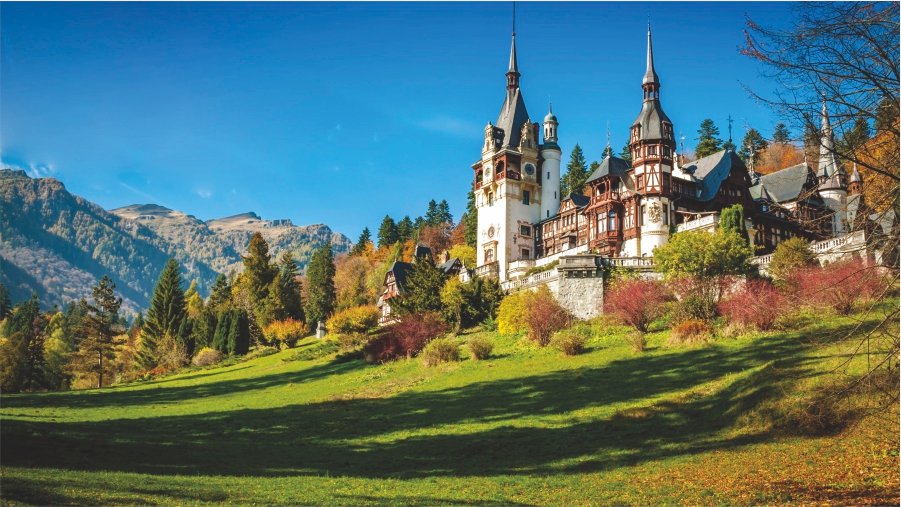
Romania is not a postcard from the past but a country perpetually in dialogue with its own history — where myth informs modernity, and where every festival, song, and stitch still hums with the timeless refrain of belonging.
To speak of Romania is to step into a land where folklore breathes and faith hums softly beneath the hills — where wooden churches whisper to the Carpathian winds and age-old rituals coexist with European grace. Nestled in the heart of the Carpathian Mountains, Romania’s vast conifer forests are celebrated not only for their beauty but also as a sanctuary for some of Europe’s rarest wildlife, including brown bears and grey wolves. Its identity is animated by the warmth of its Latin heart, the mysticism of Byzantium, and the restless energy of the Balkans. It is a country where paradoxes harmonise — ancient yet innovative, pastoral yet poetic, traditional yet brimming with modern flair.
Romania’s essence is best understood in its villages — the living archives of its soul. Here, tradition is not staged for admiration but lived as a rhythm of life. Each custom carries weight, each celebration meaning. The hora, a circular folk dance performed across the country, symbolizes unity — hands clasped, generations intertwined, moving to one pulse. In Maramureș, tall wooden gates carved with suns, spirals, and ropes stand as guardians of time, each design a coded blessing for prosperity and protection. The famed wooden churches, with their slender spires piercing the sky, embody devotion and artistry — faith rendered in timber and time.
Religion, in Romania, is less doctrine and more dialogue between the divine and the natural. The Orthodox calendar governs the rhythm of rural life, yet beneath it lies an older spirituality — one that believes the earth, too, listens. During Mărțișor, on the first day of March, red and white threads are exchanged to summon spring’s return, blending Christian and pre-Christian hopes into one. Romanian folklore abounds with creatures of wonder and warning — forest spirits, shape-shifters, and water nymphs. Even Dracula, rooted in the legend of Vlad Țepeș, is not merely a villain but a moral allegory about justice and fear. Romania’s storyscape extends beyond the mountains to the Danube Delta, Europe’s largest wetland, where wild horses roam, flocks of waterbirds soar, and winding canals whisper tales of life in harmony with water. In Romania, stories do not entertain — they endure.
The Romanian craft tradition is a visual language of identity. The ie — the traditional blouse — is a garment of grace and geography, its patterns a map of history. Recognized by UNESCO, it remains an emblem of pride, worn as readily by grandmothers in Bucovina as by fashion designers in Bucharest’s ateliers. Pottery from Horezu, with its hypnotic spiral motifs, carries centuries of unbroken lineage, while artisans in Transylvania still hammer iron and carve wood with reverence, turning everyday tools into poetry.
Music, too, is a native tongue. The melancholy of the nai (pan flute) can hush a room, its notes thick with longing — what Romanians call dor. It is not sorrow but the exquisite ache of remembering. Whether in folk ensembles of Cluj, gypsy violins of Bucharest, or jazz and electronic festivals of Sibiu, Romanian music continuously reinvents itself while keeping its heart intact.
Modern Romania pulses with invention and enterprise. The country has gifted the world life-changing innovations — the fountain pen, the jet engine, and insulin for diabetes — while its robust IT&C sector thrives on a vast pool of skilled professionals, positioning Romania as a dynamic hub of technology and creativity.
And then, there is hospitality — Romania’s most effortless art form. Guests are greeted with bread, salt, and a glass of țuică, the local plum brandy. Meals stretch into stories; laughter spills like wine. To visit is to belong, even briefly, to a place where connection is sacred. Romania does not merely display its culture — it invites you to feel it, to join the dance, to taste the centuries that still shimmer in its soul.


Leave a Reply