

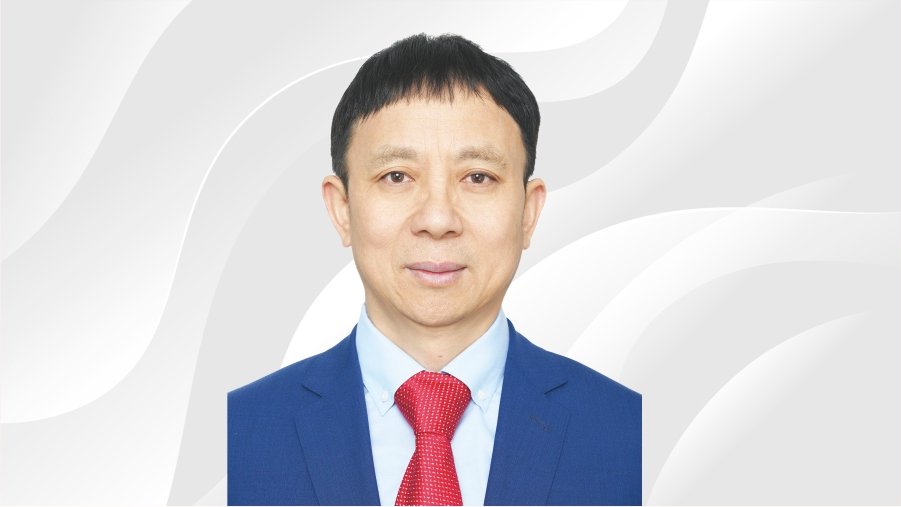
Prof Wu Xinbo, Professor & Director, Center for American Studies, Dean, Institute of International Studies, Fudan University
In an era defined by geopolitical flux, few voices offer as clear-eyed and grounded an assessment of global power shifts as Prof. Wu Xinbo of Fudan University, one of China’s foremost scholars on U.S.–China relations. In this conversation, he unpacks the evolving dynamics shaping Asia’s strategic landscape — from decoupling debates to Sino-Indian cooperation and the future of global governance.
Since the first Trump administration, strategic decoupling has been occurring between China and the United States in trade, technology, investment, and other domains. However, due to the high level of interdependence that has been formed over the years in the context of globalization, it is impossible to secure a complete decoupling between the two countries in trade and economic relations. To some extent, Washington has to live with more trade and economic links with China than it wishes. Besides, the two countries have to cooperate and coordinate with each other in diplomatic, security, law-enforcement, and other areas. As a result, Sino–U.S. relations will be shaped by unavoidable coupling and necessary engagement.
Well, the United States would like to have more competition than cooperation with China in the so-called Indo-Pacific region. However, for many other regional members, they would prefer more cooperation with China as it enhances their economic and social development goals. If the United States does not provide more opportunities for economic and social development in the region, how can it persuade regional members to reject opportunities offered by China?
Since the last decade, China has worked very hard to promote its soft power through cultural, educational, media, and other means. This has been helpful in improving China’s international image. However, in my opinion, the most important contributor to China’s soft power has been the remarkable achievements in China’s development and good governance, such as economic growth, poverty reduction, technological advances, flourishing green industry, and a clean and safe environment. As a result, China is increasingly perceived as a robust, innovative, and successful country.
India’s rise is an important part of the ongoing megatrend featured by the rise of the non-West world. It also reflects a significant shift to Asia in the global political and economic center of gravity. As a major member of the Global South, India can contribute to the reform of the international system and help build a more equitable and effective international order. Indeed, India and China have a lot in common in shaping a global governance system that is less dominated by the West and more reflective of the will of the developing world.
The biggest challenge is the geopolitical factor that has given rise to distrust and competition between China and India, while the biggest opportunity would be their cooperation in global and regional governance. As the West, particularly the United States, is unwilling to contribute to global governance, China and India — along with other like-minded countries — should play a more active role.
Intellectuals should participate in policy discussion based on their professional knowledge and research, not political considerations. When they provide opinions on policy issues, they do so out of intellectual integrity, not political correctness. As they advise policy practitioners, they offer not only suggestions but also critiques.


Leave a Reply