

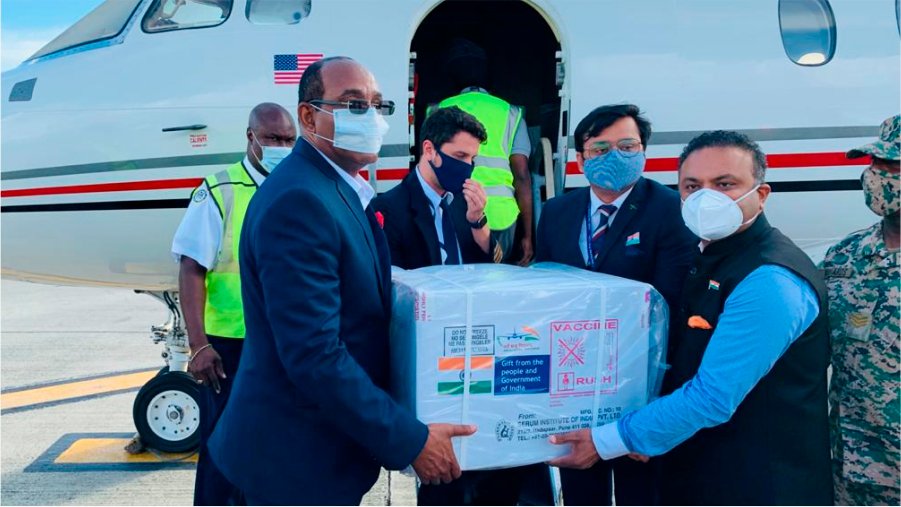
A New Epoch of Humanitarian Diplomacy
In a rapidly shifting world order marked by conflict, climate change, and post-pandemic recovery, India has quietly but decisively emerged as the torchbearer of humanitarian diplomacy. This form of diplomacy—anchored in empathy, technology, and equitable growth—has allowed India to bridge divides, support vulnerable populations, and promote a sustainable and inclusive global development agenda. From the visionary Vaccine Maitri initiative to new frontiers in digital finance, agri-tech, and environmental innovation, India’s humanitarian outreach today represents a synthesis of compassion and capability—an evolution from aid to empowerment.
From Vaccine Maitri to Global Health Solidarity
The COVID-19 pandemic was a defining moment for global health systems, revealing deep inequities in vaccine access and the fragility of supply chains. Through Vaccine Maitri, India supplied over 300 million doses of COVID-19 vaccines to more than 100 countries. This initiative wasn’t just about vials and syringes—it was about trust, solidarity, and reaffirmation of India’s role as the pharmacy of the world.
The Sanjeevani Project expanded this outreach by integrating logistics, telemedicine, and local partnerships. It provided vaccines, diagnostics, medical equipment, and digital health infrastructure to partner nations, ensuring that healthcare delivery remained consistent and compassionate even in remote geographies. This confluence of health diplomacy and technology-driven delivery set a new benchmark for global cooperation in public health.
Healthcare Manufacturing: Made in India, for the World
Beyond vaccines, India’s medical devices and consumables sector has been an unsung hero of global health resilience. The pandemic showcased India’s ability to innovate and scale—producing affordable, reliable, and high-quality medical consumables, disposables, implants, and syringes that reached both developing and developed markets.
Affordable Indian-made syringes, safety needles, catheters, and implants now form the backbone of many public health programmes in Africa, Latin America, and Southeast Asia. With Production-Linked Incentive (PLI) schemes and regulatory harmonisation aligning with international standards, India’s MedTech sector is set to play a pivotal role in shaping the future of global health access.
Environmental Diplomacy: Green Technology, Global Good
India’s humanitarian diplomacy is extending to the frontlines of climate vulnerability. Through the International Solar Alliance (ISA) and Coalition for Disaster Resilient Infrastructure (CDRI), India has provided adaptation technologies such as solar-powered desalination systems, heat-resilient agriculture, and early-warning systems.
Indian environmental engineers and innovators are helping design sustainable water management systems, low-cost air-quality monitoring tools, and waste-to-energy plants across the developing world. These interventions are framed not as charity but as shared progress—a model of South-South cooperation rooted in empathy.
Space Diplomacy: Expanding Horizons Beyond Borders
India’s achievements in space have become a pillar of global cooperation. Collaborations with NASA, UNOOSA, and multiple space agencies now allow developing countries to access satellite-based data for disaster management, agriculture forecasting, and climate monitoring. This space diplomacy is anchored not in dominance, but in shared development, creating truly global public goods.
Digital Diplomacy and FinTech: UPI’s Global Footprint
No Indian innovation has transformed humanitarian diplomacy more tangibly than UPI. What began as a domestic revolution in financial inclusion has evolved into a global FinTech model. UPI embodies India’s humanitarian tech ethos—simple, secure, scalable, and socially impactful. Countries across Asia, Africa, and the Middle East have adopted or adapted the UPI framework.
Through UPI-linked collaborations, India is exporting not just a payment platform but a trust-based digital ecosystem. This teaches the world that digital finance can be inclusive, transparent, and sovereign-friendly.
Agri-Tech Diplomacy: Feeding the Future Sustainably
Food security remains one of the most pressing global challenges. Through its agricultural research network and thriving agri-tech startups, India is helping developing economies achieve low-cost, high-yield, and climate-resilient farming. From drone-based crop monitoring and soil mapping to AI-driven irrigation, Indian innovation is improving agricultural productivity worldwide.
These partnerships are not about dependency—they are about empowering local farmers to become agents of their own progress.
Supply Chain and Mineral Diplomacy: Reliability in Uncertain Times
Even amid geopolitical disruptions, India has maintained its reputation as a dependable anchor in global supply chains. From pharmaceuticals and medical supplies to rare-earth minerals and digital infrastructure, India has ensured the continuity of critical supplies to partner nations in the Global South.
In the emerging race for rare-earth minerals, India is adopting a model of responsible resource partnerships focused on capacity-building, local employment, and environmental sustainability. This approach marks India’s transition to a leader in humanitarian supply-chain diplomacy.
AI and the Future of Humanitarian Relief
As AI becomes integral to governance, India is advocating for ethical, inclusive, and human-centric AI. AI-driven healthcare diagnostics, disaster management tools, and educational applications exemplify how Indian innovation serves humanity first. Under initiatives like AI for All and Digital India, technology is being deployed to uplift—not replace—human capability.
India: A Beacon for the Global South
In a world where pandemics, conflicts, and polarisation threaten global cohesion, India’s diplomacy shines as a beacon of balanced leadership and technological compassion. The journey from Vaccine Maitri to Tech-Enabled Relief symbolises a new era of engagement—one defined not by dominance or dependence, but by shared progress, empathy, and empowerment.
India’s expanding humanitarian footprint—spanning healthcare, environment, space, fintech, agriculture, and AI—demonstrates that diplomacy in the 21st century can be about uplifting humanity through technology. As the world enters a new age of digital and ecological transformation, India’s unique blend of compassion and capability will continue to define its leadership—especially across the Global South.



Leave a Reply