

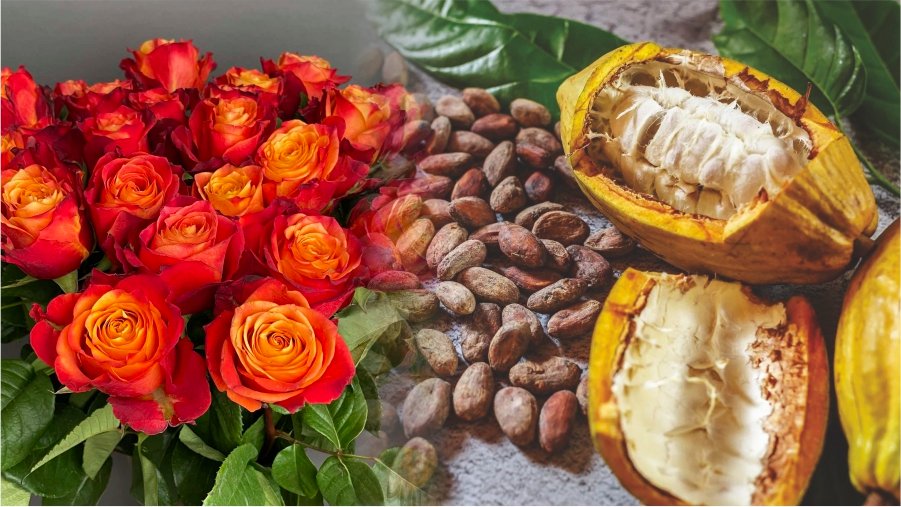
Ecuador punches far above its weight in two very different — yet equally evocative — agricultural exports: roses and cocoa. Both are products of geography and craft: roses grown at high altitudes around Quito produce large, velvety blooms prized by florists worldwide; Ecuadorian cocoa, especially the famed Arriba/Nacional variety, is prized by chocolatiers for its complex, floral aroma. Together they have become emblematic of an export model that blends terroir, smallholder livelihoods and rising global demand.
The floral sector has been on a striking run. Quito’s airports have repeatedly reported record flower shipments during peak seasons — Valentine’s Day and Mother’s Day — with tens of thousands of tons flown out in concentrated bursts that keep international supply chains humming. These air-freight corridors underpin Ecuador’s ability to deliver fresh, premium roses to the United States and Europe within tight freshness windows, a logistical advantage that competitors on sea routes cannot match. The export bounce has translated into notable revenue gains for exporters and farmers alike.
Cocoa’s story is both ancient and newly lucrative. Ecuador long ago earned renown for Arriba/Nacional beans — a “fine-flavour” cocoa whose sensory profile (floral, tea-like and nuanced) commands premium prices in specialty chocolate markets. In recent years cocoa has surged into national economic headlines: Ecuador’s cocoa exports generated several billion dollars in recent cycles, reflecting booming global chocolate demand and a strategic push to upgrade quality and traceability in supply chains. This boom has turned cocoa into one of the country’s most valuable agricultural exports.
Ecuador is deepening value-addition at home: more local chocolate manufacturing that showcases Arriba cacao; boutique rose brands that tie provenance to story and sustainability; and stronger linkages between tourism, gastronomy and agri-exports. When place, people and product align — as they have for Ecuador’s roses and cocoa — the result is an export narrative that is as much cultural capital as it is foreign exchange.


Leave a Reply