

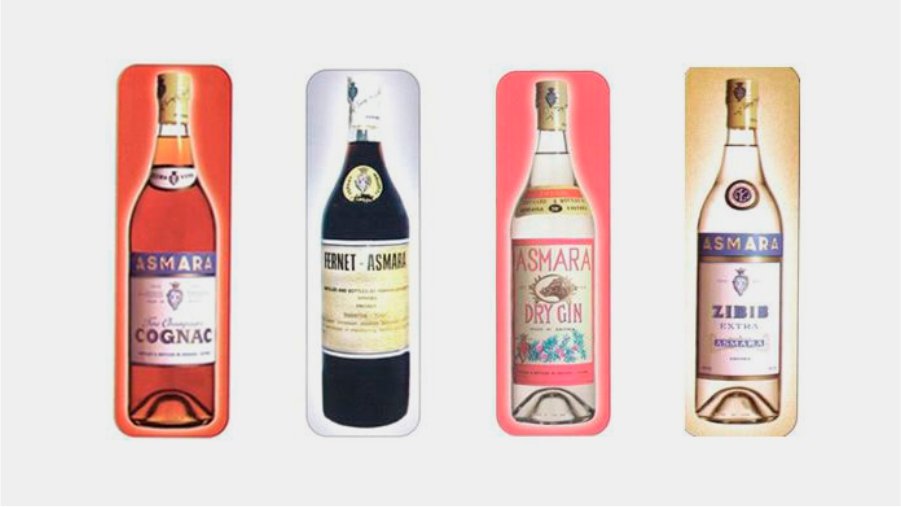
Among the many cultural imprints left by history, few are as quietly enduring as the taste of a drink. In the case of Eritrea and Italy, that drink is anise liqueur — known globally in variations such as Sambuca in Italy, Ouzo in Greece, and Arak in the Levant. In Eritrea, it evolved into a distinct local spirit known as Anisette Asmara, a legacy of the Italian colonial period that has found its own place in Eritrean social life and identity.
The story begins in the late 19th and early 20th centuries, when Italian colonists established Asmara as the political and administrative center of Italian East Africa. The city soon developed into one of Africa’s architectural and cultural jewels — its Art Deco movie halls, cafés, pastry shops, and tree-lined boulevards still preserve the elegance of that era. With this urban culture came Italian culinary and drinking traditions, including espresso, pasta, and liqueurs.
In 1939, Italian entrepreneurs founded what is now known as the Asmara Brewery. Initially producing beer for colonial officers and settlers, the brewery soon diversified, creating local versions of Italian spirits. Among these, Anisette Asmara became the most iconic. Inspired by Italian Sambuca, it is a clear, sweet, anise-flavoured liqueur with a distinctive aromatic profile — smooth, aromatic, and slightly herbal. Traditionally served neat, with water, or occasionally flamed, it is enjoyed at celebrations, family gatherings, and social cafés.
Yet, Eritrea did not merely inherit the drink — it localised it. Anise liqueur soon blended into Eritrean customs alongside suwa (fermented barley beer) and meis (honey wine). Local communities also continued the tradition of Araki — a strong home-distilled spirit sometimes infused with anise. The coexistence of imported and local styles reflects Eritrea’s layered cultural identity: African at its core, shaped by the Mediterranean, yet unmistakably its own.
Today, Anisette Asmara remains a symbol of historical continuity. Even after Eritrea gained independence in 1993, the brewery continued to operate, producing beer, gin, cognac, and rum in addition to the famed anise liqueur. The drink lives on not as a relic of colonialism, but as a reinterpreted cultural artifact — adopted, adapted, and integrated into Eritrean life.
In Italy, Sambuca is often served with coffee beans — con la mosca, “with the fly.” In Eritrea, the drink is more informal and communal, shared in cafés where Italian and Tigrinya conversations often mingle. The drink becomes less about empire and more about connection, memory, and everyday sociability.
In a world where cultural exchange is often discussed through diplomacy and policy, the story of Anisette Asmara is quieter but no less meaningful. It reminds us that cultures interweave not just through treaties or trade agreements but through taste, habit, and shared human pleasures. A glass of anise liqueur — sipped slowly at dusk in Asmara or Rome — is a testament to that lingering, complex relationship between two worlds, carried on the tongue.


Leave a Reply