

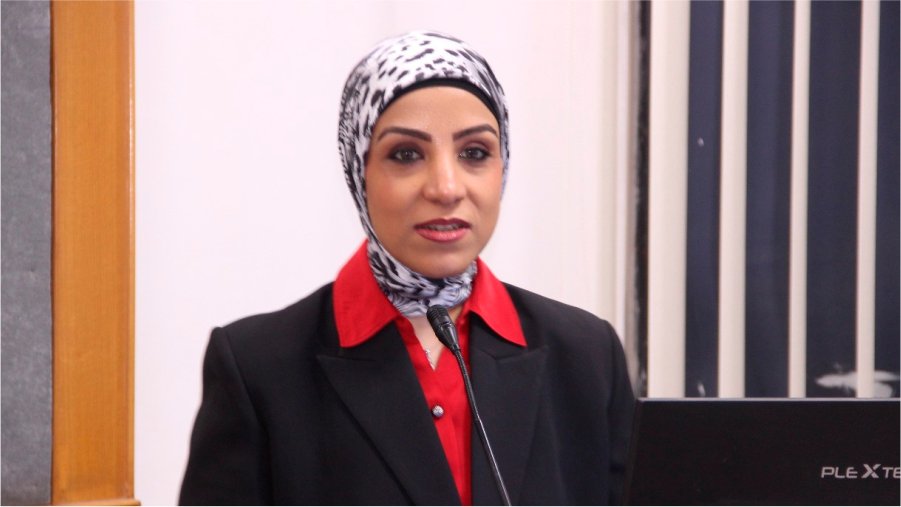
Speaking at the panel discussion on 19th November 2025, themed “Navigating Diplomacy through Turbulent Times” at the Indian Institute of Foreign Trade (IIFT), jointly organised by Diplomatist Magazine, Professor (Dr.) Hebatallah Adam, Full Professor of Economics and Associate Dean for Doctoral Studies at the Jindal School of International Affairs (JSIA), delivered a deeply analytical and timely address. The event also marked the unveiling of Diplomatist’s Annual Edition titled “The Times They Are A-Changin’.”
An Era Defined by Polycrisis
Professor Adam began by acknowledging the complexity of the current global moment.
“We must acknowledge—honestly and without hesitation—that we are living in an era of fragmentation. Not a single crisis, but what scholars now call polycrisis.”
She described a world facing simultaneous shocks—economic slowdowns, geopolitical tensions, energy disruptions, climate acceleration, technological upheavals, and fragile supply chains. These crises, she explained, interact with and reinforce each other, intensifying uncertainty. Emerging economies, she noted, often feel these pressures more sharply than others.
Drawing on the IMF’s July 2025 World Economic Outlook, she observed that global growth has slowed to around 3 percent, far below the pre-pandemic average. Even so, she underlined a significant divergence: many countries of the Global South are outperforming global averages, with several growing at six percent or higher.
This, she argued, signals a clear shift in global power dynamics. The Global South is no longer a passive participant; its economic momentum is reshaping the world’s centre of gravity.
The Reshaping of Global Supply Chains
Professor Adam then reflected on what she called one of the most consequential transformations of the decade—the remapping of global supply chains. The world, she said, has moved away from an efficiency-only model.
“Dependence on a small set of global hubs is unsustainable,” she remarked, emphasising how the pandemic and successive geopolitical shocks exposed the vulnerabilities of hyper-centralised systems.
A new logic now defines global production: resilience, diversification, and de-risking. Nations are rethinking manufacturing locations, industries are redistributing value chains, and new regional clusters are emerging. She pointed to India’s Production-Linked Incentives, Vietnam’s expanding electronics sector, and Egypt’s dynamic Suez Canal Economic Zone as evidence of this shift.
These evolving patterns, she suggested, present a generational opportunity. If emerging economies can strengthen their infrastructure, logistics networks, and skilled labour ecosystems, they can position themselves as indispensable partners in the new global supply architecture.
The Growing Power of South–South Partnerships
A second major trend that Professor Adam highlighted was the accelerating momentum of South–South cooperation. Drawing on UNCTAD’s 2024 findings, she noted that investment flows between Global South economies now exceed traditional North–South flows. This indicates not only a preference for diversified economic relationships but also a recalibration of trust and opportunity.
She explained that countries across Asia, Africa, and Latin America are increasingly engaged in co-developing digital infrastructure, launching joint ventures in renewable energy, expanding logistical linkages, and utilising platforms such as the African Continental Free Trade Area. The 2024 expansion of BRICS, she said, has further broadened financial and trade pathways for emerging economies.
According to her, this deeper South–South engagement allows developing countries to reduce dependency, build resilience, and amplify collective bargaining power on the global stage.
Green Energy as Strategy, Not Just Responsibility
Turning to climate and sustainability, Professor Adam emphasised that the energy transition has become a strategic arena. “Countries are now treating green energy as an economic and geopolitical opportunity,” she noted.
The Global South, she argued, is well-positioned in this space—not only because of its renewable potential, but also because it owns many of the critical minerals essential for green technologies. This creates opportunities in manufacturing, in exporting future fuels like green hydrogen, and in fostering local research ecosystems capable of pioneering new technologies.
However, she also stressed the persistent challenge of climate finance. Equitable and predictable financing, particularly through emerging platforms such as BRICS, is crucial if the Global South is to lead rather than follow in the green transition.
The Digital Shift and a New Geoeconomic Landscape
Professor Adam underscored the profound implications of the digital transformation underway across the world. She referenced the UN Digital Economy Report 2024, which projects Asia’s digital production to exceed USD 2 trillion by 2030. This, she argued, positions emerging economies at the heart of global digital innovation.
She emphasised the necessity of investing in cybersecurity, artificial intelligence, digital skills, and robust regulatory frameworks governing digital trade. If emerging economies do not establish leadership in this domain, she warned, they risk becoming dependent consumers of technologies developed elsewhere.
“If we do not lead in the digital age, we will be forced to follow—and that is a strategic disadvantage we cannot afford.”
Conclusion: From Navigating to Shaping the Future
In her closing remarks, Professor Adam offered a powerful call to action. “We live in a moment of profound uncertainty. But uncertainty should not weaken emerging economies—it should mobilise us.”
She urged nations of the Global South not to simply adapt to global power shifts but to actively participate in shaping them. This moment, she argued, must be met with strategic clarity, collaborative ambition, and a firm commitment to building shared futures.
“If we harness our strengths strategically and collaboratively, we will not only navigate turbulent times—we will help define the architecture of the future global order.”


Leave a Reply