

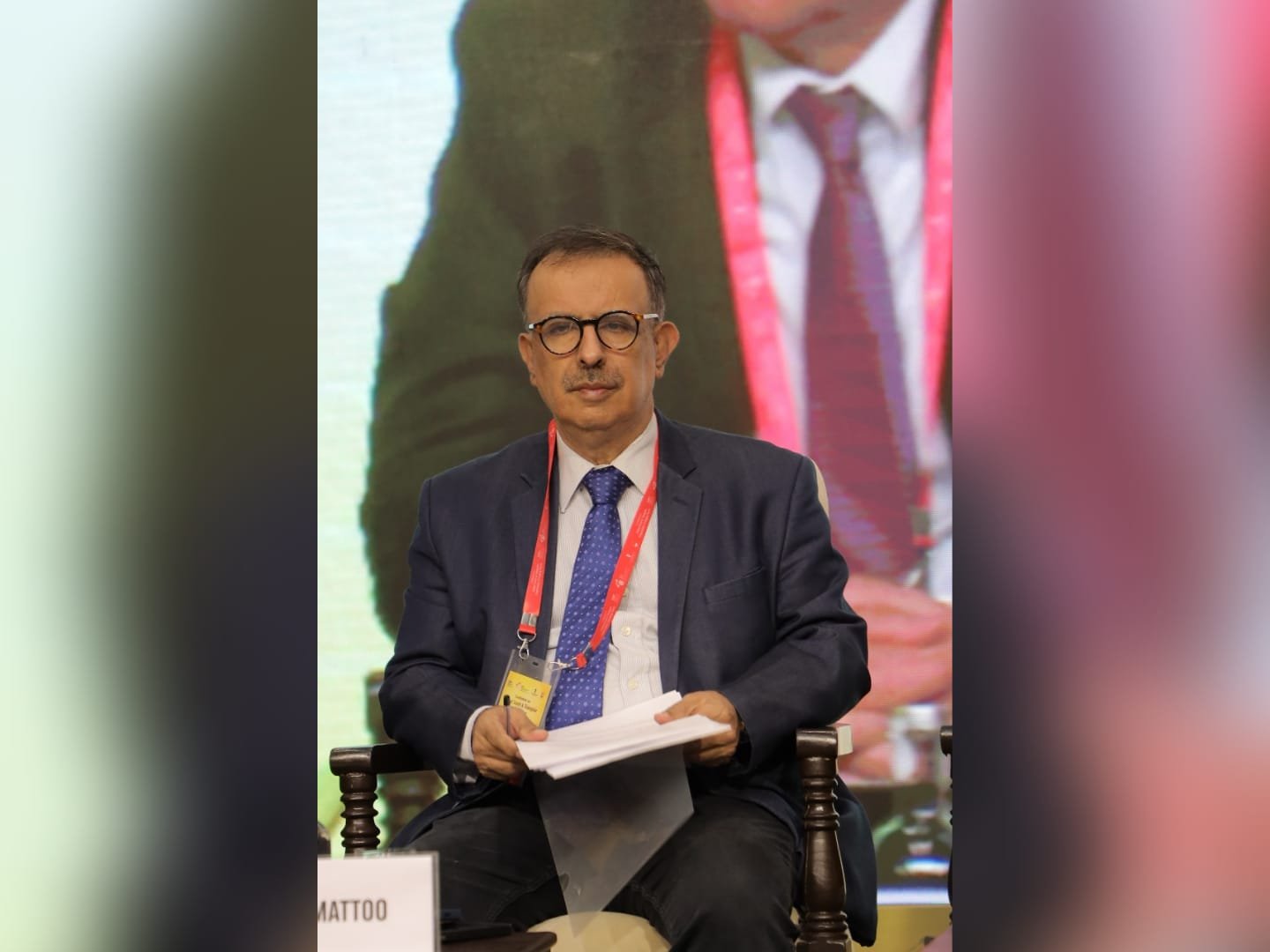
At a high-level panel during the International Conference on “Global South and Triangular Cooperation: Emerging Facets,” organised by the Research and Information System for Developing Countries (RIS), Professor Amitabh Mattoo, Dean of the School of International Studies at Jawaharlal Nehru University, offered stirring reflection on the historical and contemporary relevance of the Bandung Conference. Seventy years after the seminal gathering in 1955, Professor Mattoo urged the international community to draw upon Bandung’s foundational values to navigate today’s complex global challenges.
“The Bandung Conference was not merely a diplomatic event; it was a declaration,” he said. “A declaration by the newly decolonised nations of the Global South that we would no longer remain the passive objects of history. We would be its authors—agents of change.”
A Moral Turning Point
Held in the aftermath of colonialism’s collapse, the Bandung Conference was a powerful assertion of sovereignty, dignity, and non-alignment. “In 1955, Bandung was a moral inflexion point,” Professor Mattoo reminded the audience. “It marked a collective assertion by formerly colonised nations that we would not enter the global order as supplicants, but as self-respecting actors capable of reshaping the ethics and structures of international governance.”
As the world of 2025 contends with a polycrisis—from climate change and pandemics to global inequality and fractured multilateralism—Professor Mattoo noted that “the spirit of Bandung is more urgent than ever.” The answer, he stressed, does not lie in isolated national responses but in “collective will and collective action.”
Triangular Cooperation: A Modern Interpretation
While celebrating Bandung’s legacy, Professor Mattoo cautioned against reducing it to a ceremonial memory. Instead, he advocated for reviving its essence in contemporary terms, particularly through triangular cooperation—a model that bridges South-South partnerships with the experience and resources of the North.
“As Dean of the School of International Studies, one of the oldest such institutions in Asia, I can assure you that we remain intellectually committed to nurturing precisely this global imagination,” he said.
This vision, according to him, must prioritise new frameworks of cooperation that are inclusive and rooted in the agency of the Global South, yet open to equitable collaboration with the Global North.
Three Propositions for the Way Forward
Professor Mattoo outlined a compelling vision for reinvigorating the Bandung spirit through three interlinked propositions. He emphasised that development cooperation today must transcend the narrow confines of efficiency and be firmly rooted in ethics. “Development cooperation must not be informed just by efficiency, but by ethics,” he asserted, cautioning that the Global South must not fall into replicating the same extractive logic once imposed by the North. Instead, he argued, partnerships—whether through South-South or triangular cooperation—must be built on trust, equity, and mutual learning.
He then called for a deepening of intellectual solidarity, urging the creation of a vibrant knowledge network across universities, think tanks, and civil society institutions that genuinely reflect the realities and aspirations of the Global South. “Let us build a new knowledge network… that reflects Southern realities and aspirations,” he said, citing institutions like Nalanda University, RIS, and JNU as natural leaders of this renewed epistemic movement, one capable of challenging entrenched hierarchies in global knowledge production. He also stressed the need to move decisively from rhetoric to institution-building. “The Global South needs enduring platforms on health, education, technology, and governance that enable the co-creation of solutions,” he noted. For Bandung to remain relevant, he argued, it must evolve from a symbolic movement into a dynamic mechanism that can deliver tangible and transformative outcomes.
Unity in Diversity
A particularly resonant note was struck when Professor Mattoo addressed the internal diversity of the Global South. Rather than viewing this as a constraint, he described it as a strategic strength. “We must recognise the diversity within the Global South not as a liability, but as a strength,” he said. “It is through dialogue across regions, languages, and lived experiences that we will craft a resilient architecture for the future.”
Bandung as a Living Idea
Closing his address with a poetic flourish, Professor Mattoo invoked the spirit of Rabindranath Tagore, who warned against “the suicidal cold of artless intellect” and called instead for a “union of love and understanding.”
To Professor Mattoo, Bandung is not an artifact of the past but a living idea that must continue to evolve. “We must not allow the spirit of Bandung to fossilise into sepia-toned nostalgia,” he warned. “Nor should triangular cooperation become a hollow technocratic catchphrase. Together, they can serve as the twin pillars of a new, inclusive multilateralism—rooted in justice, informed by lived experience, and committed to meaningful action.”


Leave a Reply