

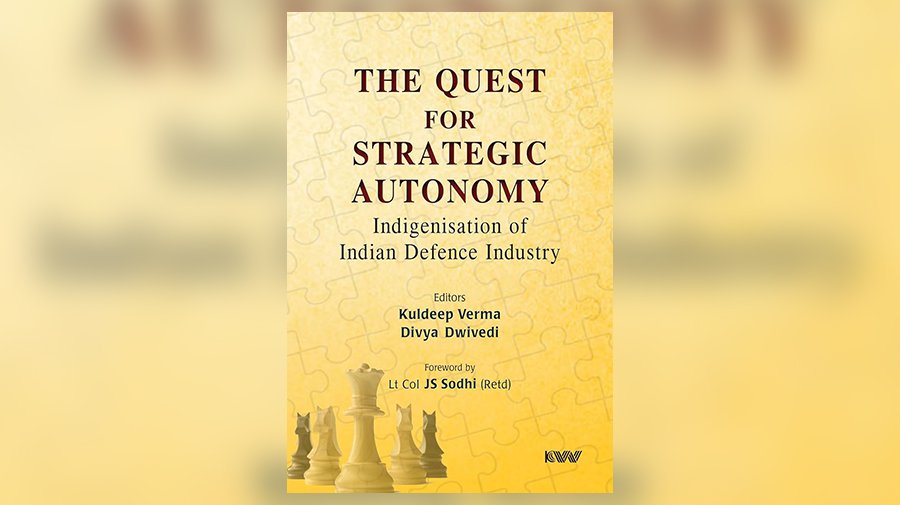
Edited by: Dr. Kuldeep Verma and Dr. Divya Dwivedi;
Foreword by: Lt. Col JS Sodhi (Retd)
Publisher: KW Publishers Pvt Ltd, New Delhi
In an era of geopolitical shifts and regional instabilities prompting nations to rethink their strategic postures, India’s quest for “strategic autonomy” has become a cornerstone of its defence policy. “The Quest for Strategic Autonomy: Indigenization of Indian Defence Industry,” edited by Dr. Kuldeep Verma and Dr. Divya Dwivedi, is a timely publication that examines the pivotal theme of India’s Atmanirbharta (self-reliance and preparedness) in defence technology and production. This edited volume provides a comprehensive approach and is visionary in its perspective, offering a detailed examination of India’s efforts towards cultivating robust and self-sufficient defence industries in India.
The book opens with a compelling foreword by Lt. Col JS Sodhi (Retd), setting the stage for a deep dive into the complex and multifaceted efforts towards defence indigenization in India. The editors have meticulously compiled contributions from a spectrum of defence experts, scholars, and policymakers, creating a rich tapestry of insights that depict the nuances of India’s strategic autonomy endeavours.
Structure and Content
The volume is divided into two sections, Primarily, “Policy Framework and Developments” and second is “Case Studies of Defence Production and Developments.” Each section meticulously contributes several chapters focused on the theme. This structure allows the reader to grasp both the theoretical framework and the practical implementations of policies affecting India’s defence sector. One of the key strengths of the book is its examination of various initiatives aimed at promoting indigenization, such as the “Make in India” program. It discusses the successes and setbacks of these initiatives, which provides insights into the complexities of establishing a robust domestic defence sector.
Section One: Policy Framework and Developments
Section One serves as the backbone of the book, beginning with chapters like “The Shadow Balance: Ethical Issues of Global Arms Trade” and “DPEPP 2020: Paving the Path to Self-Reliance and Global Competence,” which contextualize India’s strategic motivations within the broader global arms landscape. Particularly noteworthy is the chapter on “Artificial Intelligence and Cosmic Safeguard (Space Technology),” which critically evaluates the drivers of upgrades, not merely as a reactionary measure but as a proactive future strategy.
The discussion on the integration of private sectors through chapters like “Ensuring India’s Defence Autonomy Through More Private Sector Collaboration” highlights a significant shift from traditional patterns, advocating for a more collaborative approach in production.
Section Two: Case Studies of Defence Production and Developments
Section Two meticulously examines India’s evolving defence sector through focused case studies that highlight significant achievements and address inherent challenges. A standout chapter on “BrahMos Aerospace: Pioneering Versatility and Global Impact in Missile Systems” delves into the successful Indo-Russian collaboration on the BrahMos missile, underscoring its strategic enhancement of India’s defence capabilities. Another critical discussion in “From Ideas to Action: The Role of Defence and Aerospace Startups in Strengthening India’s National Security Industry” explores the burgeoning role of startups, showcasing their innovative potential and the bureaucratic hurdles they navigate in a traditionally state-dominated arena. Additionally, “A Paradigm Shift: Private Sector Companies in the Defence Industry” evaluates the increasing participation of private enterprises, spurred by policy reforms, highlighting their role in driving competition, efficiency, and innovation within the defence manufacturing landscape. Collectively, these chapters provide a comprehensive look at the dynamic shifts toward greater indigenization and strategic autonomy in India’s defence production
Analysis and Contributions
Each chapter of both sections contributes to a layered understanding of the geopolitical, technological, and economic dimensions of defence indigenization. This is a compiled volume that balances scholarly depth with accessibility, making this book a valuable resource for policymakers, defence professionals, researchers and academicians.
Furthermore, it addresses the complexities and hurdles in the path of India’s strategic autonomy, which provides a balanced view by discussing both achievements and areas where more attention is required, such as the corporatization of the Ordnance Factory Board and the challenges in expanding defence exports.
Conclusion
“The Quest for Strategic Autonomy: Indigenization of Indian Defence Industry” is an essential addition to the field of defence studies and strategic studies, International relations, and politics. It not only enriches the reader’s understanding of the current dynamics in India’s defence sector but also serves as a blueprint for other nations aspiring towards greater defence Atamnirbharata. The editors, Dr. Kuldeep Verma and Dr. Divya Dwivedi, along with the esteemed contributors, have crafted a work that is both informative and transformative, echoing the complexities and ambitions of India’s defence narrative in the 21st century and the coming future. This book can spark further discussion and research on strategic autonomy and indigenization, making it a must-read for anyone interested in the future of global security and defence strategies.



Leave a Reply